LIVR Avatar
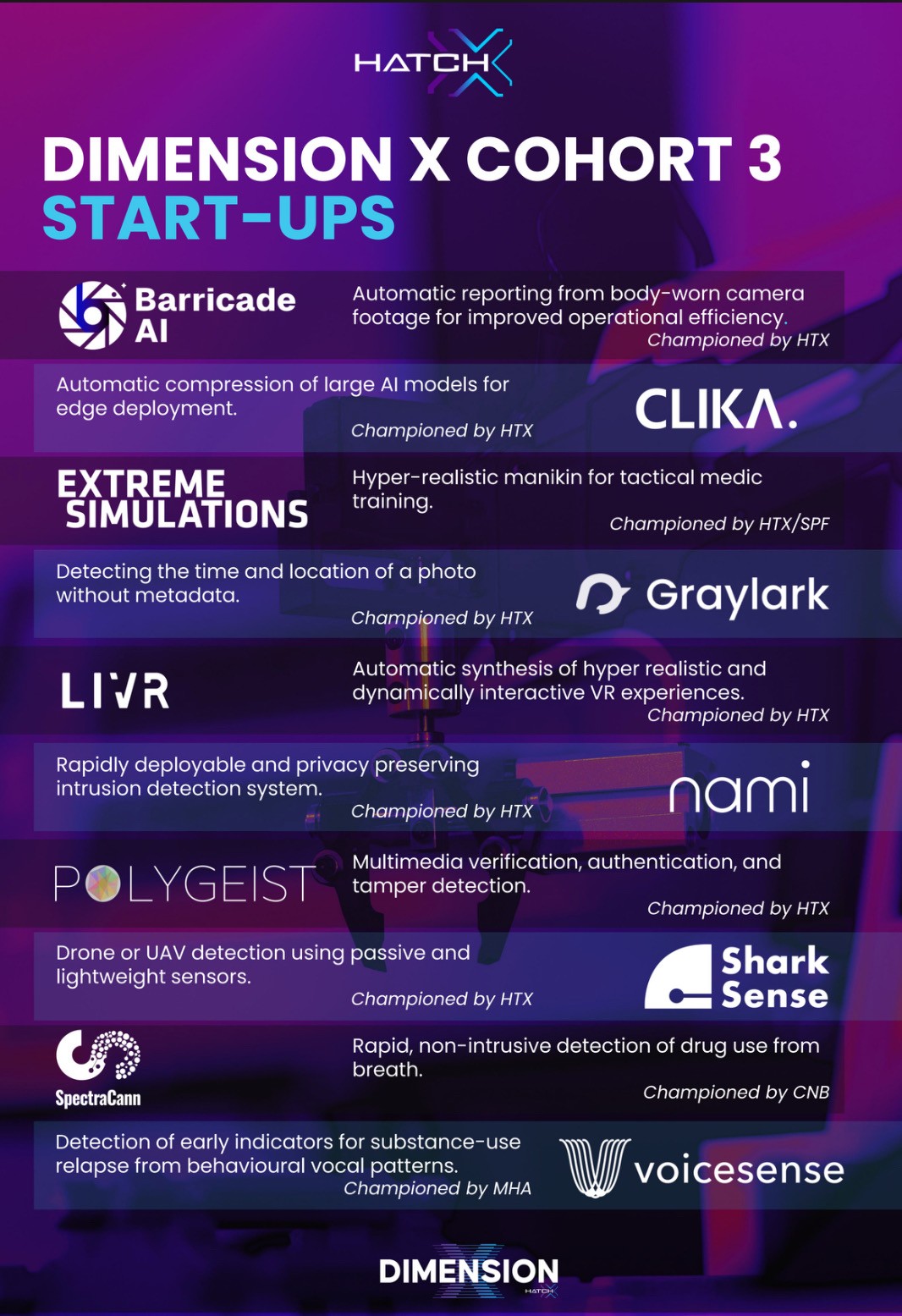
As part of LIVR Studios, I contributed to the design and development of a confidential prototype AI-powered avatar created in collaboration with the Singaporean Prison Service. Built using Unreal Engine’s Metahumans, the avatar was part of an immersive drug resistance simulation used to assess addiction risk among incarcerated individuals. The project was part of Dimension X, a start-up accelerator run by HTX (Home Team Science and Technology Agency) to encourage collaboration between global tech innovators and Singaporean government agencies.
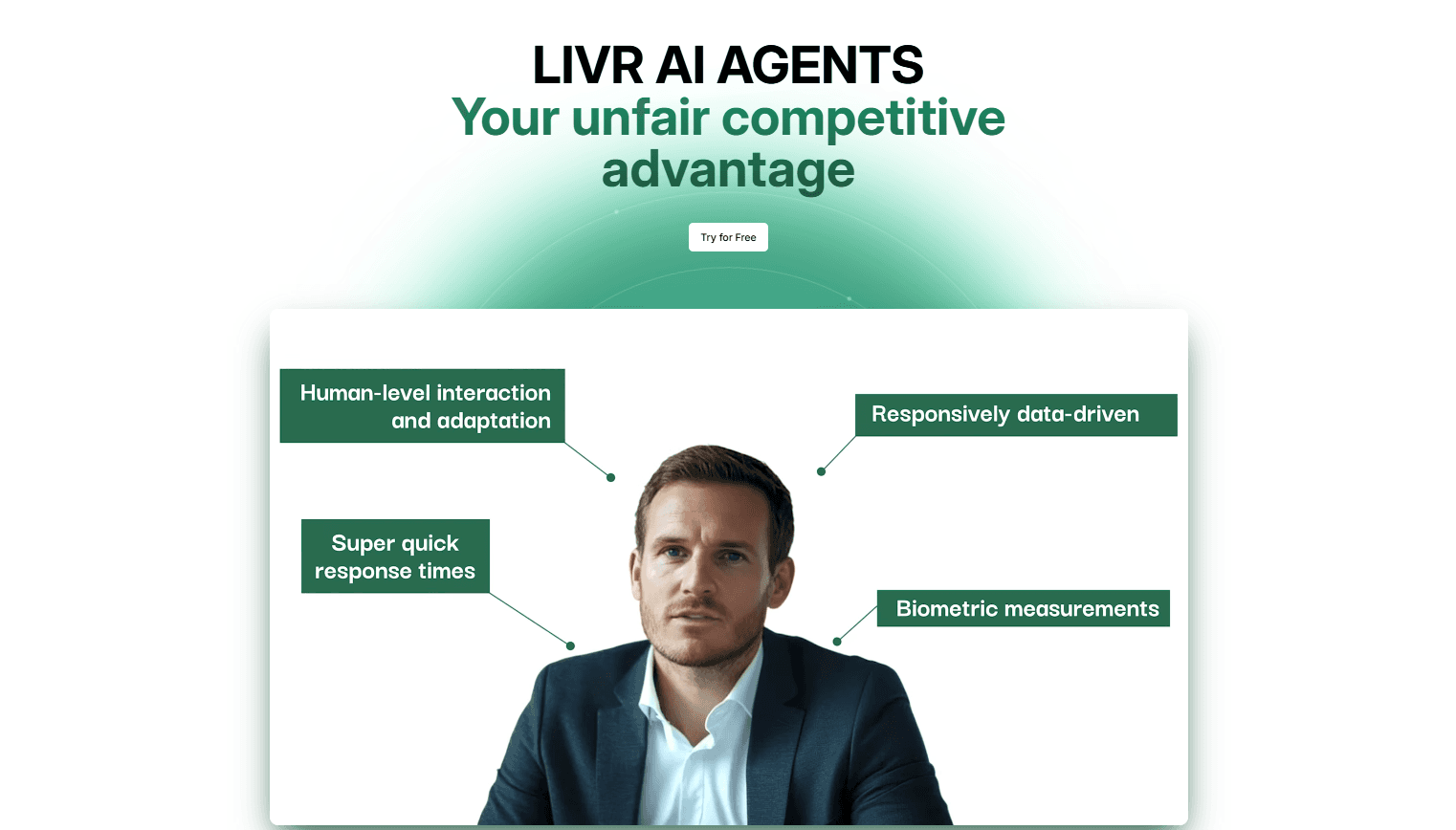
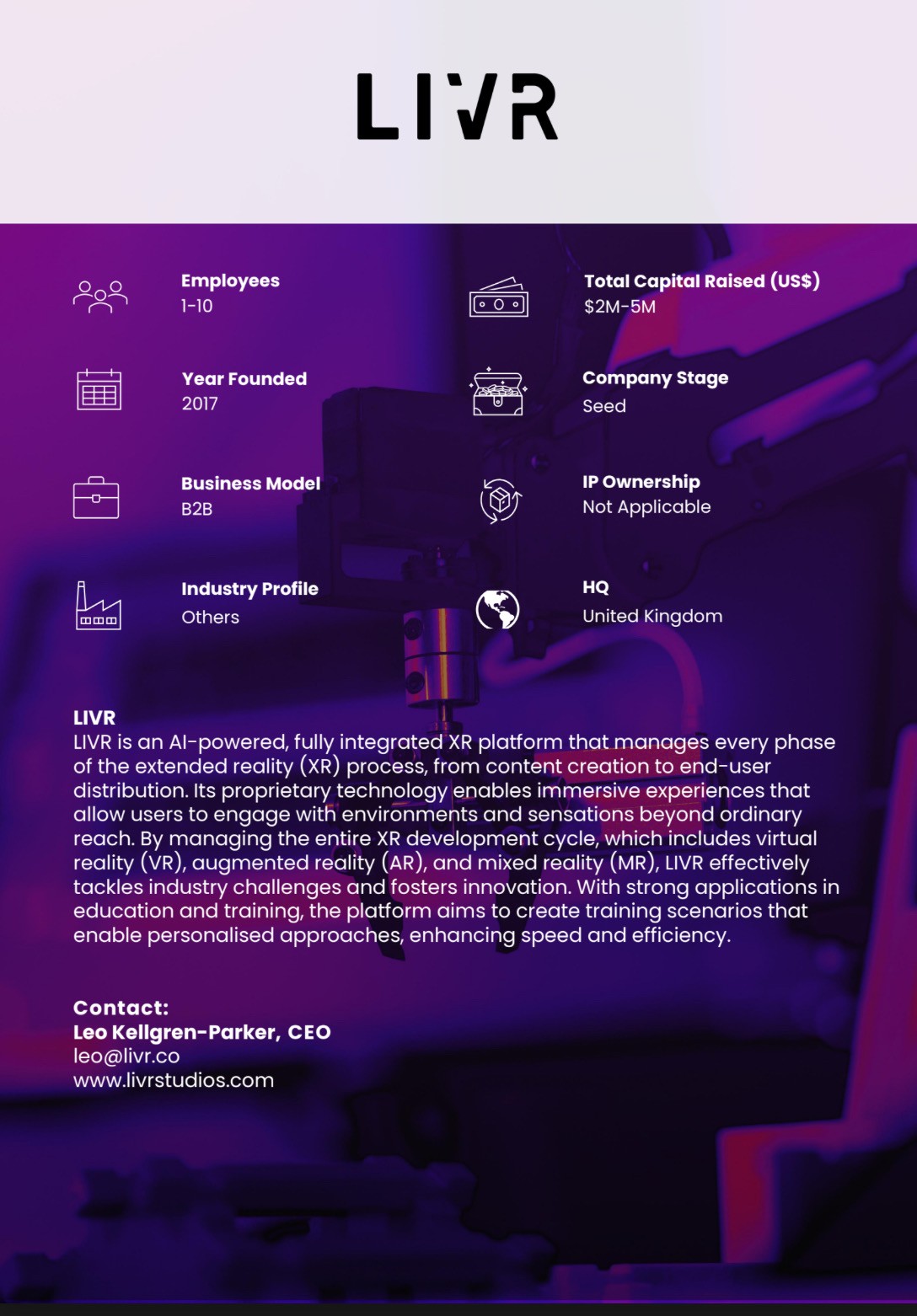
The project then went on to become its own product, LIVR Avatar, which could be personalised to any use case, but most popular in B2B training scenarios.
Click here to visit the website
Type:
AI agent (immersive health tech prototype)
Role:
UX & VR designer, avatar designer, promotional video production
Skills:
UX for VR · Unreal Engine · Metahuman avatar design · AI + biometric integration · Video production
Collaborators:
The LIVR team; Singapore Prison Services (via HTX Dimension X)
Objective:
Our goal was to design a virtual reality experience in which an AI avatar would simulate a drug offer scenario in a domestic setting. By measuring both verbal responses and user reactions (e.g. heart rate and eye movement), prison staff could evaluate an inmate’s likelihood of relapse after release from prison.
This approach replaced standard questionnaires with an emotionally and physically engaging scenario, mirroring the real-world triggers that traditional assessments miss.
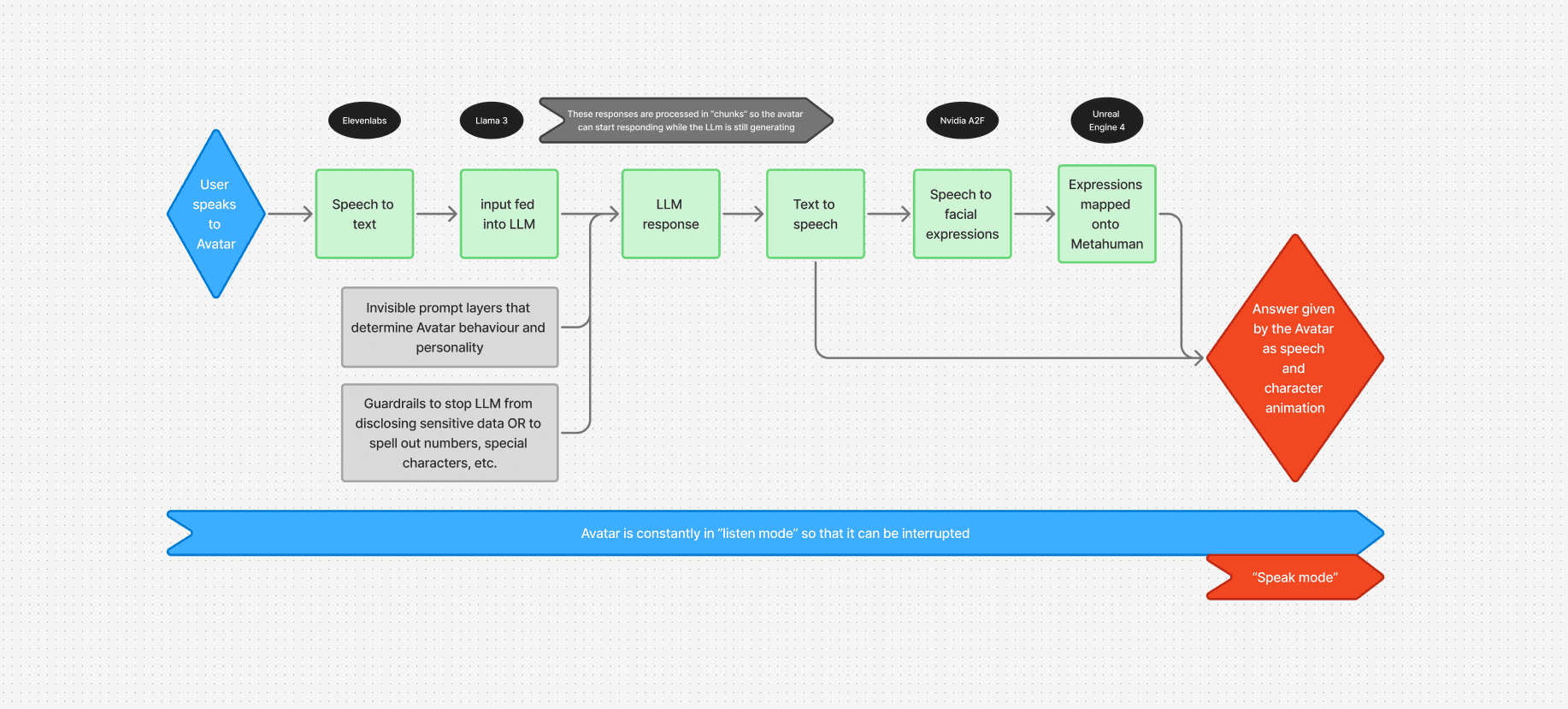
Metahuman avatar and immersive scenario built in Unreal Engine 4
LLaMA 3 AI language model to generate unscripted dialogue
NVIDIA Audio2Face (A2F) to sync generated text with facial expressions in real time
Pico 3 built-it eye tracking to capture behavioural data
Heart rate monitor armband to track biometric data
This pipeline created an NPC that felt lifelike and emotionally persuasive.
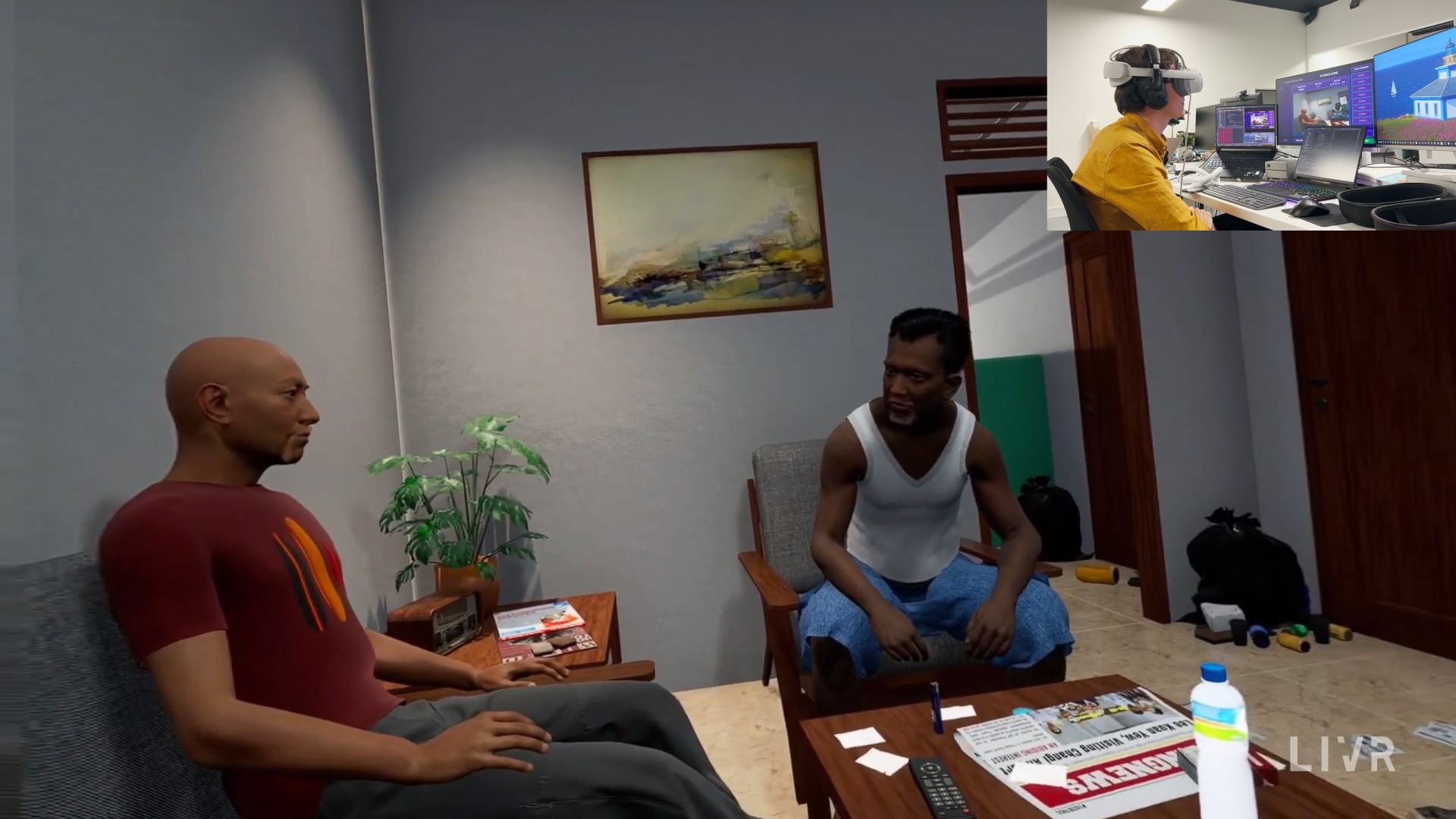
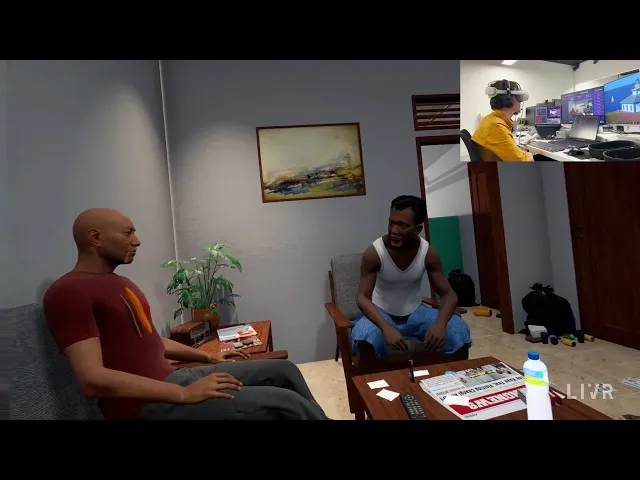
The first scenes of the storyline were scripted by the team in Singapore, and involved the participant meeting a friend in a virtual Singaporean apartment. The introductory conversation with the first NPC allowed for no interactions. Subsequently, they would enter a drug dealer's apartment, at which point the conversation would become open ended as the AI-powered dealer would attempt to coax the participant into accepting a substance. We prompt-engineered the language model to respond in contextually appropriate ways, while maintaining enough unpredictability to trigger genuine reactions.
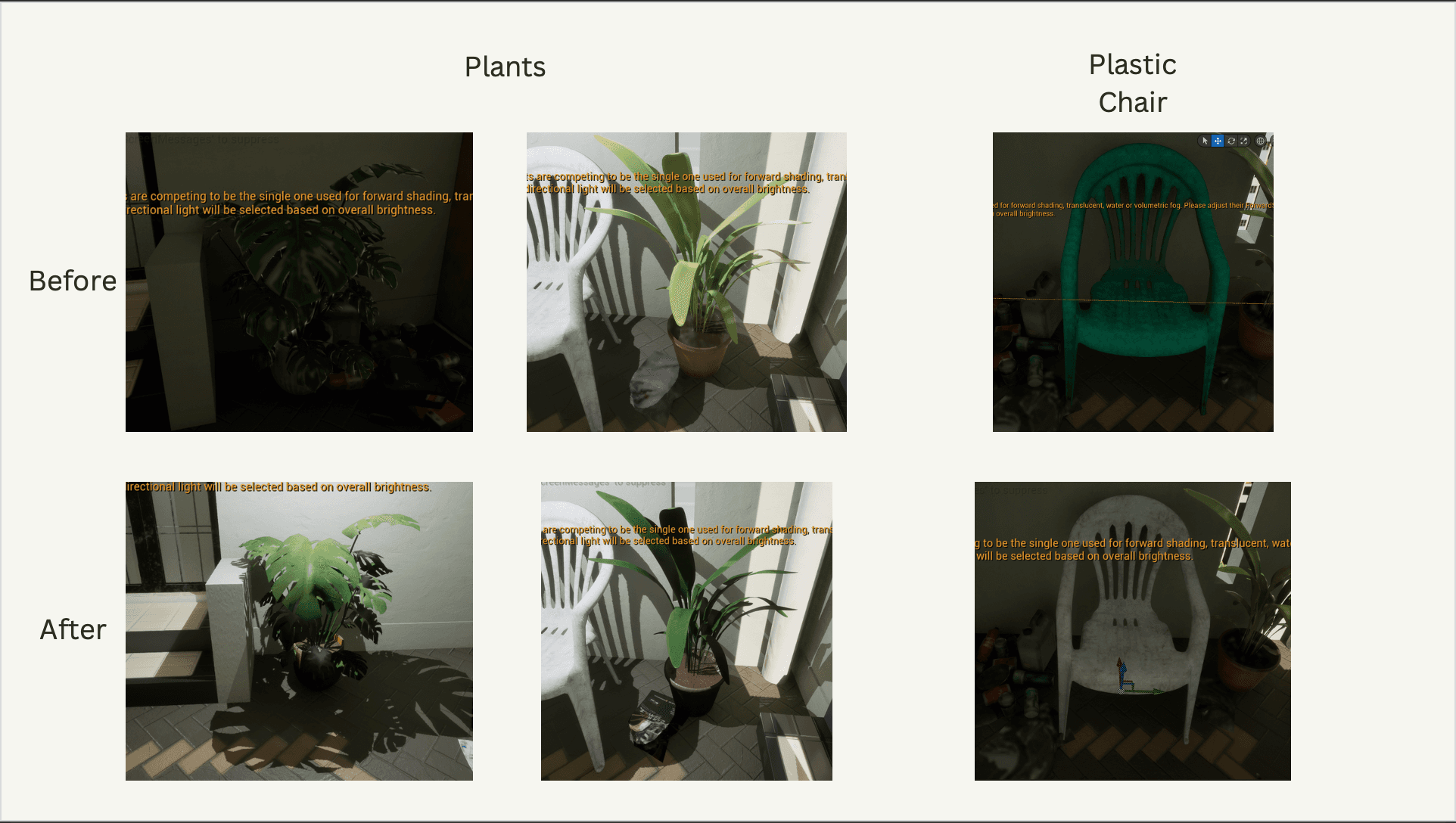
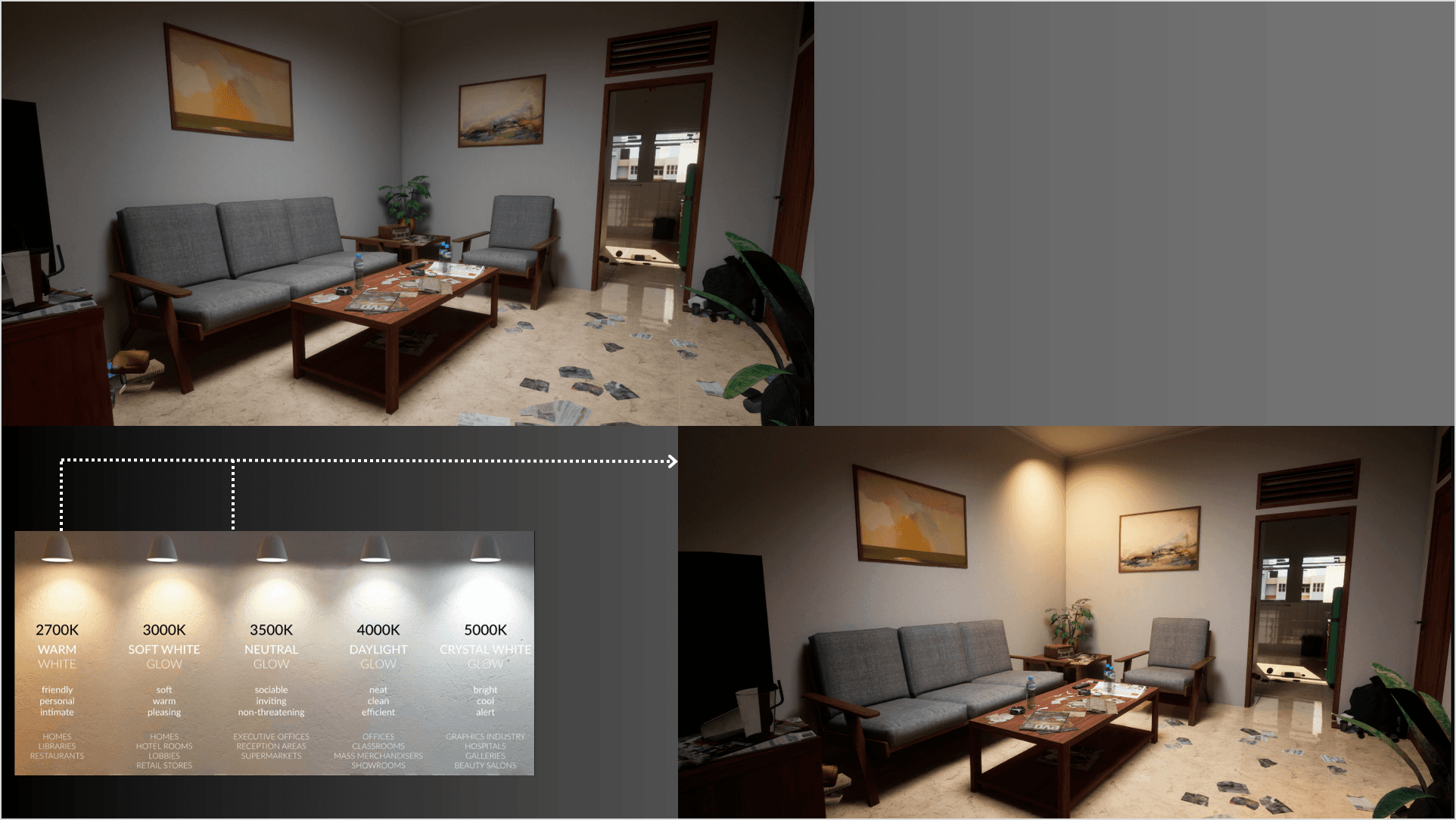
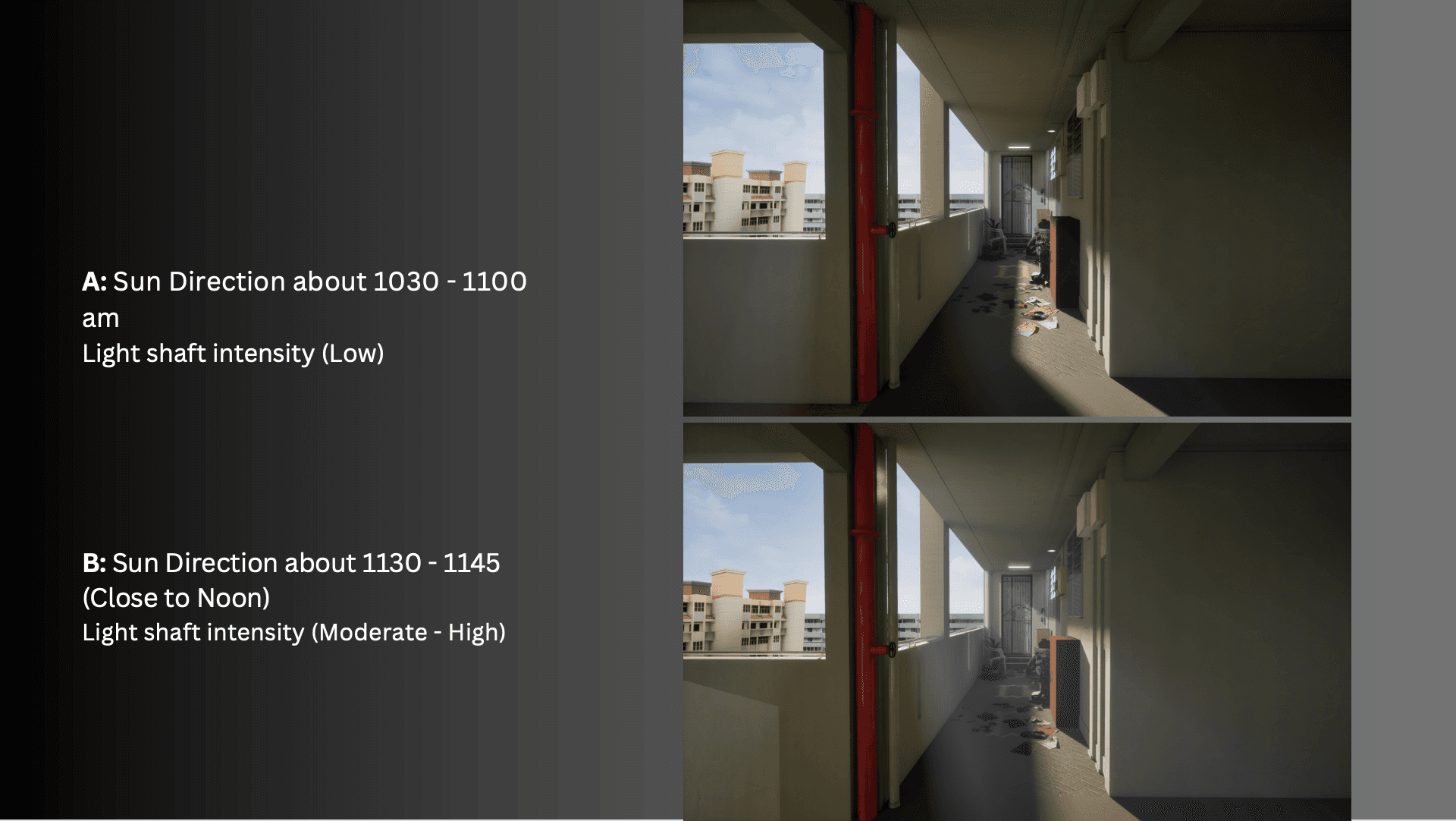
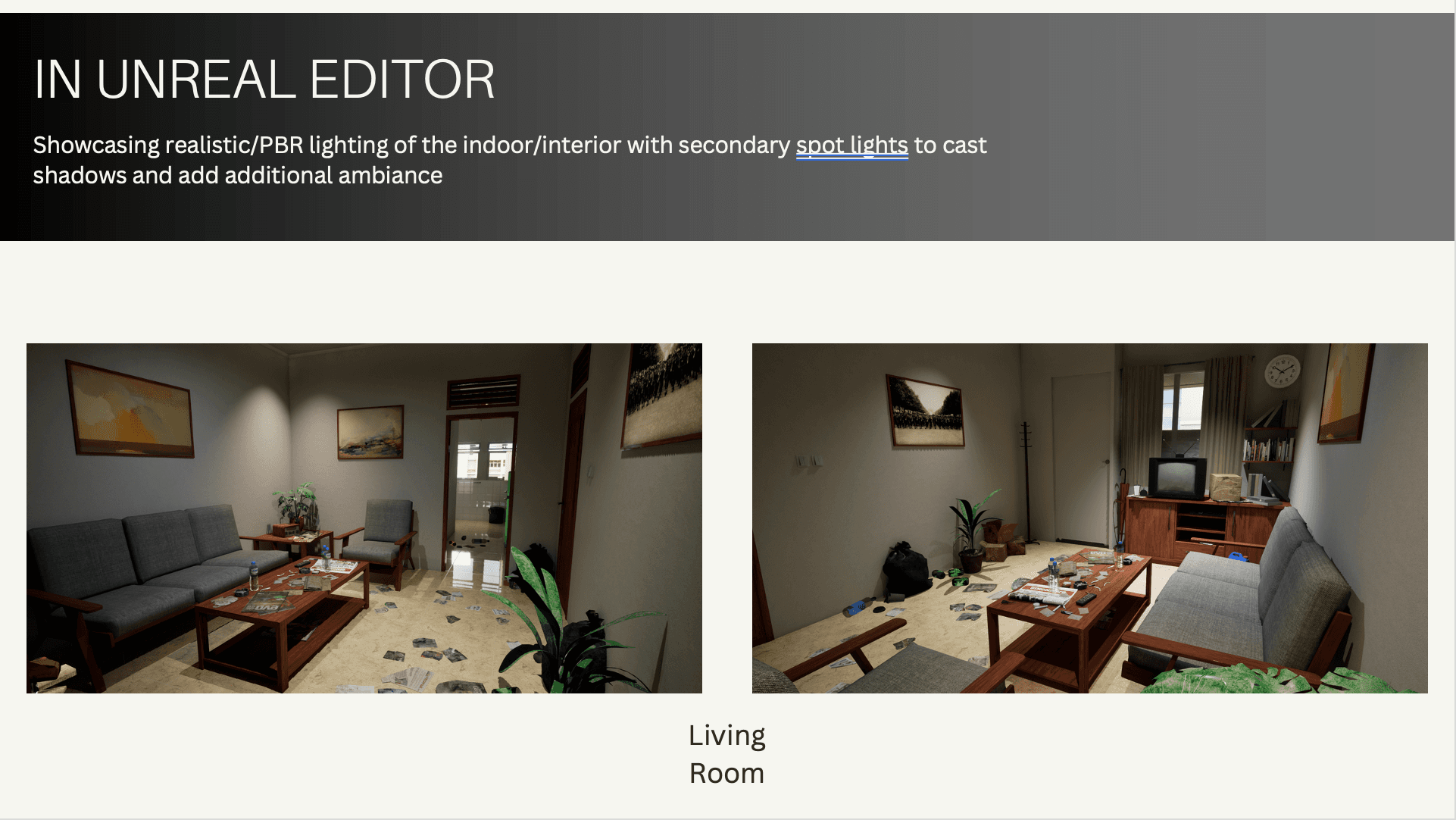
I helped design the environment and NPCs to resemble real scenarios in Singapore as closely as possible. The conversational realism, visual fidelity, and sense of spatial presence aimed to provoke a measurable emotional response.
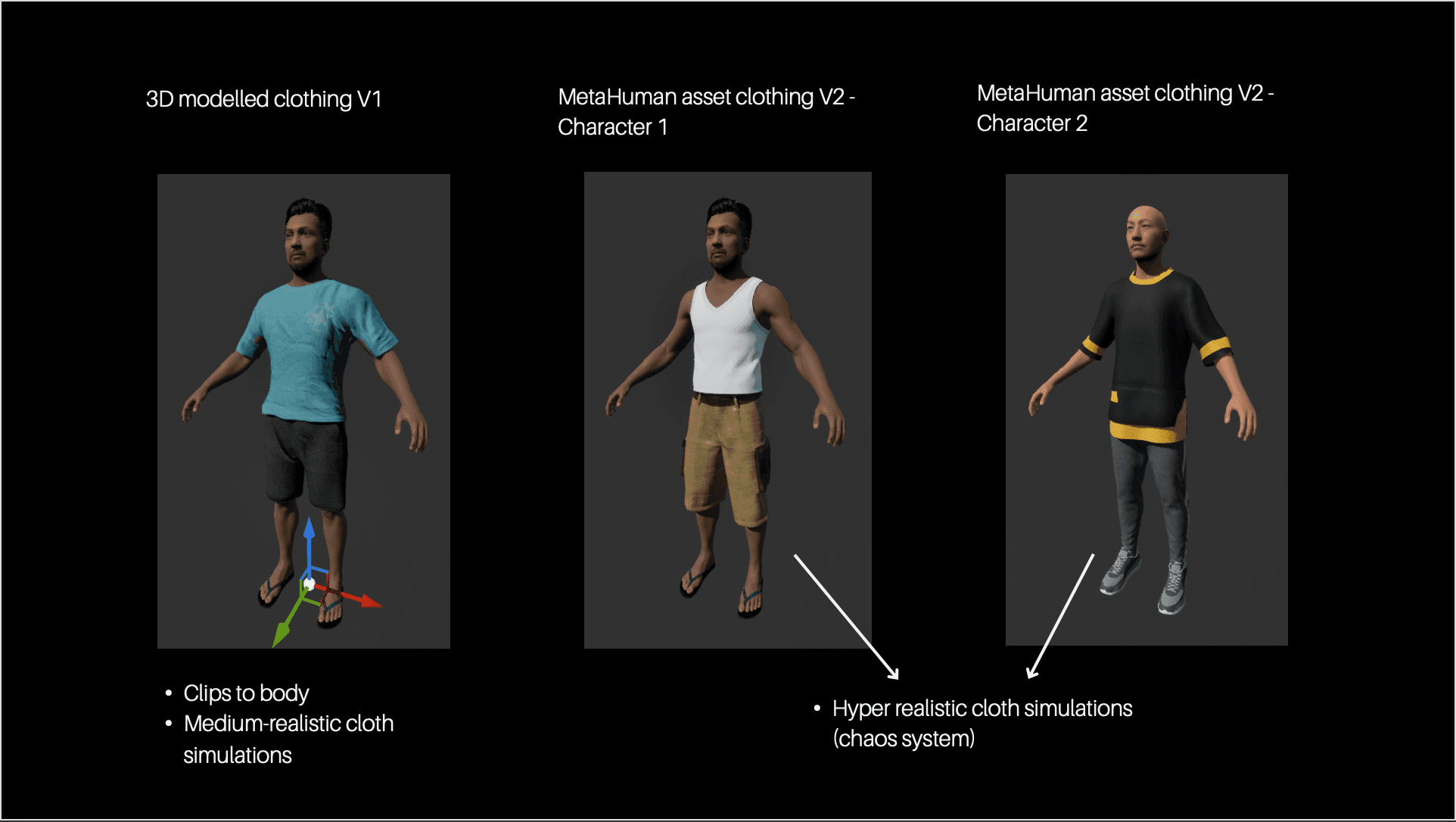
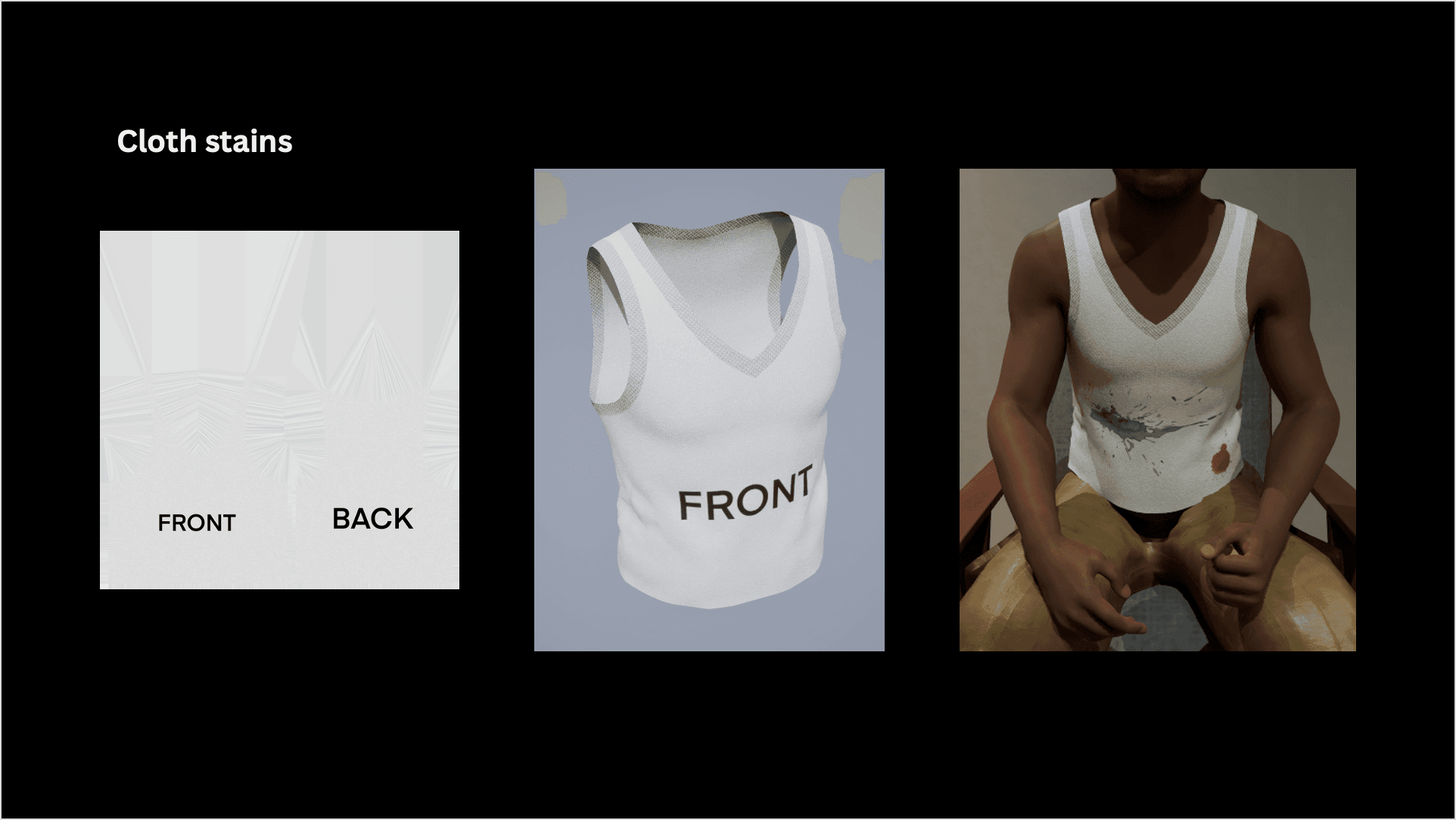
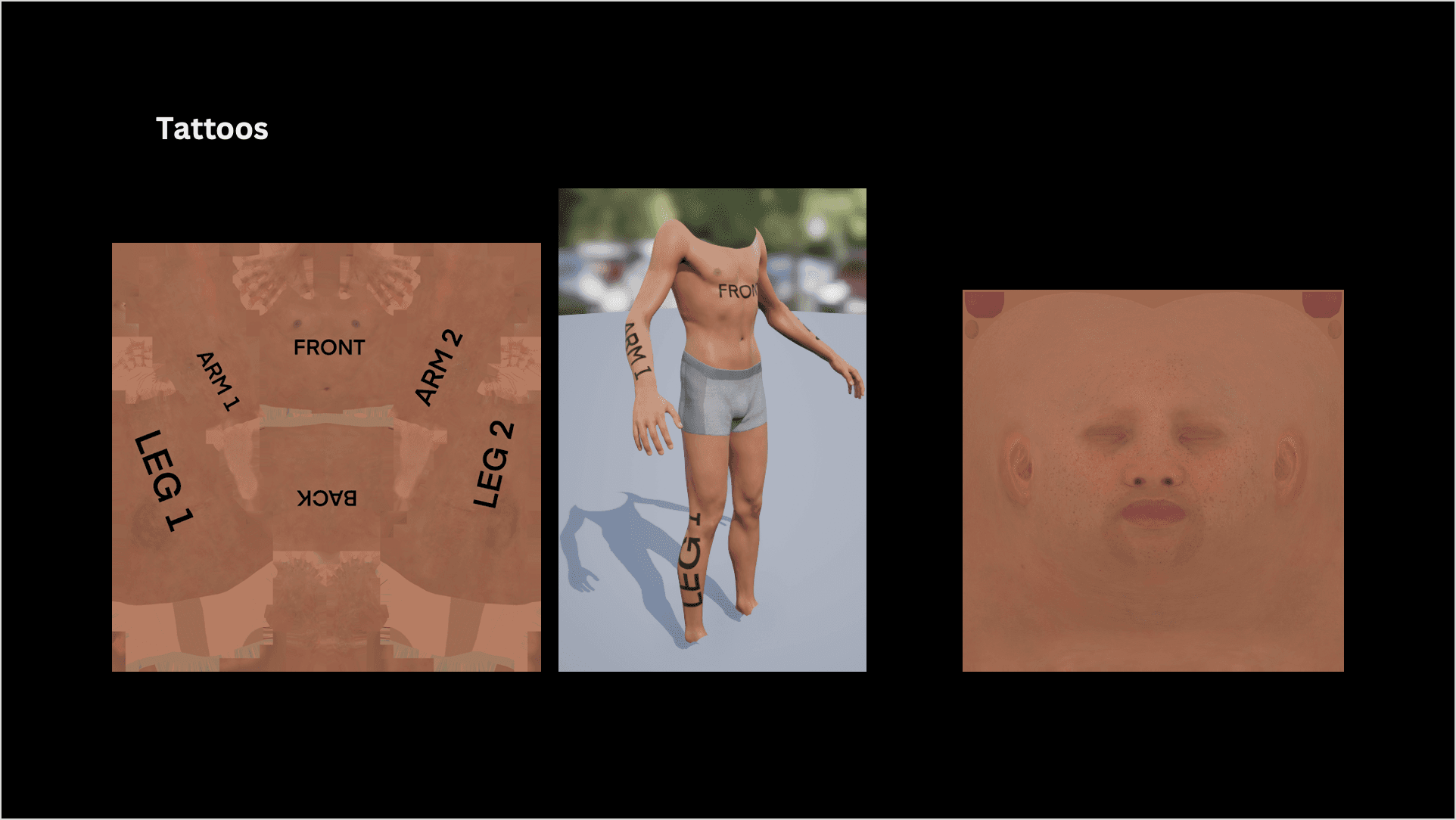
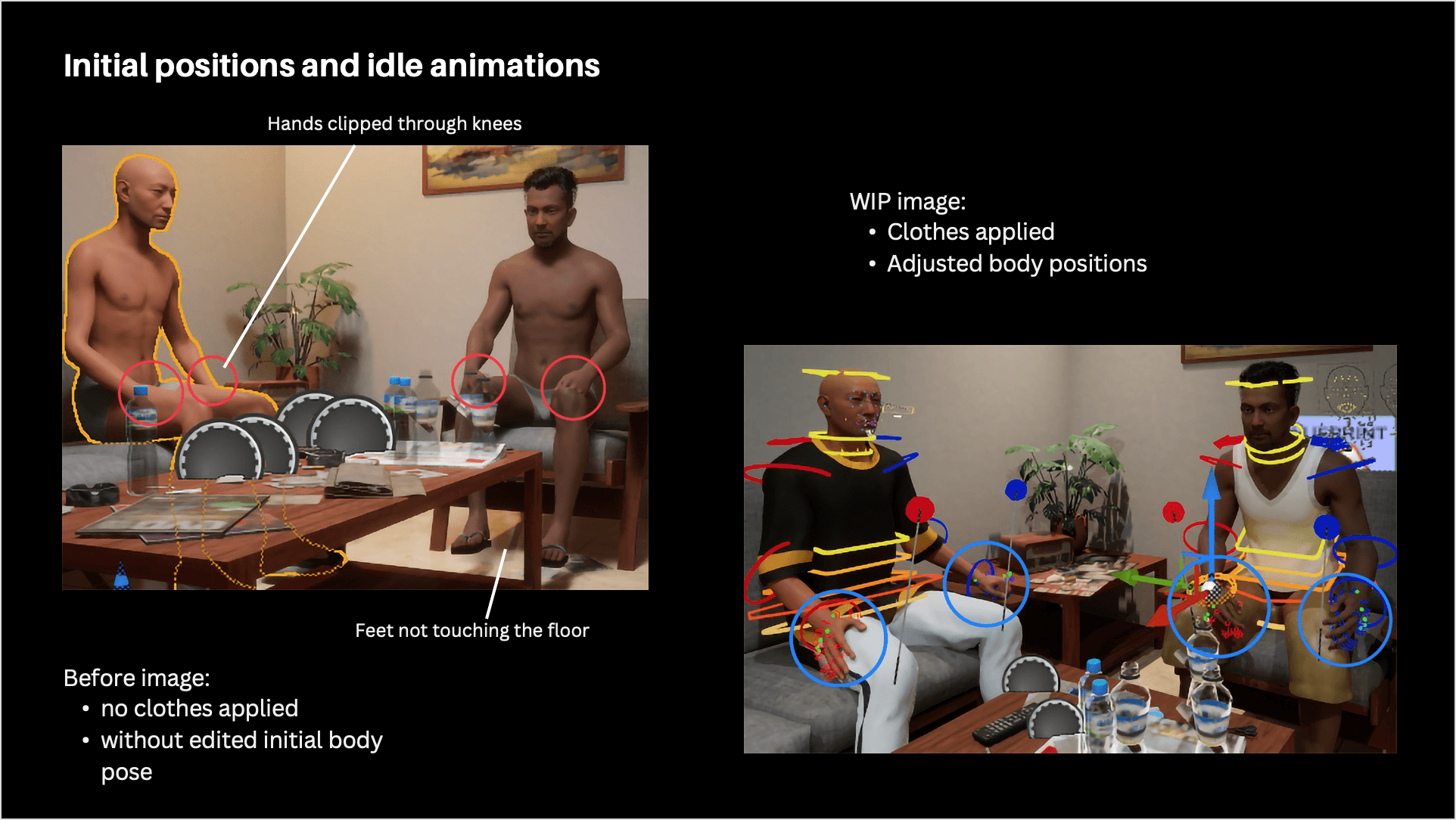
Face tracking, clothes simulation, and idle animations for NPCs
After six months of iterative development and stakeholder testing, we delivered a fully functioning prototype. The scripted part of the immersive simulation was approximately 3 minutes long, while the conversation with the AI could last anywhere up to 10 minutes.
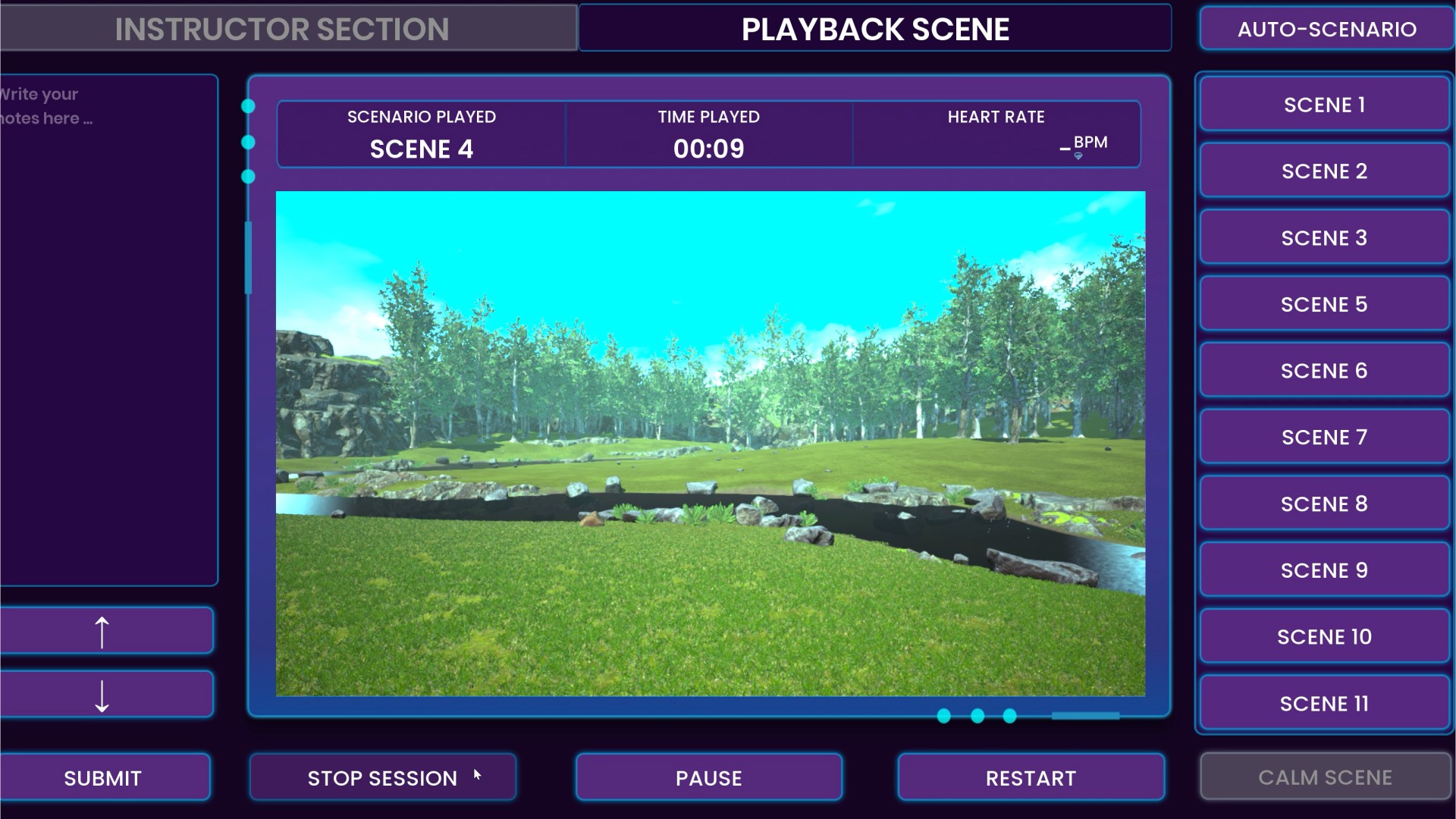
A moderator would set up the experience for the inmate by placing the VR headset and heart rate monitor on them. A custom UI interface allowed the moderator to witness the participant experiencing the simulation, with additional insights into their biometric data in real time. This would help in their assessment of the inmate's rehabilitation process.
A snapshot of the User Interface as seen by the moderator. Created in Figma and implemented in UE4
A short demo of the drug dealer avatar during testing
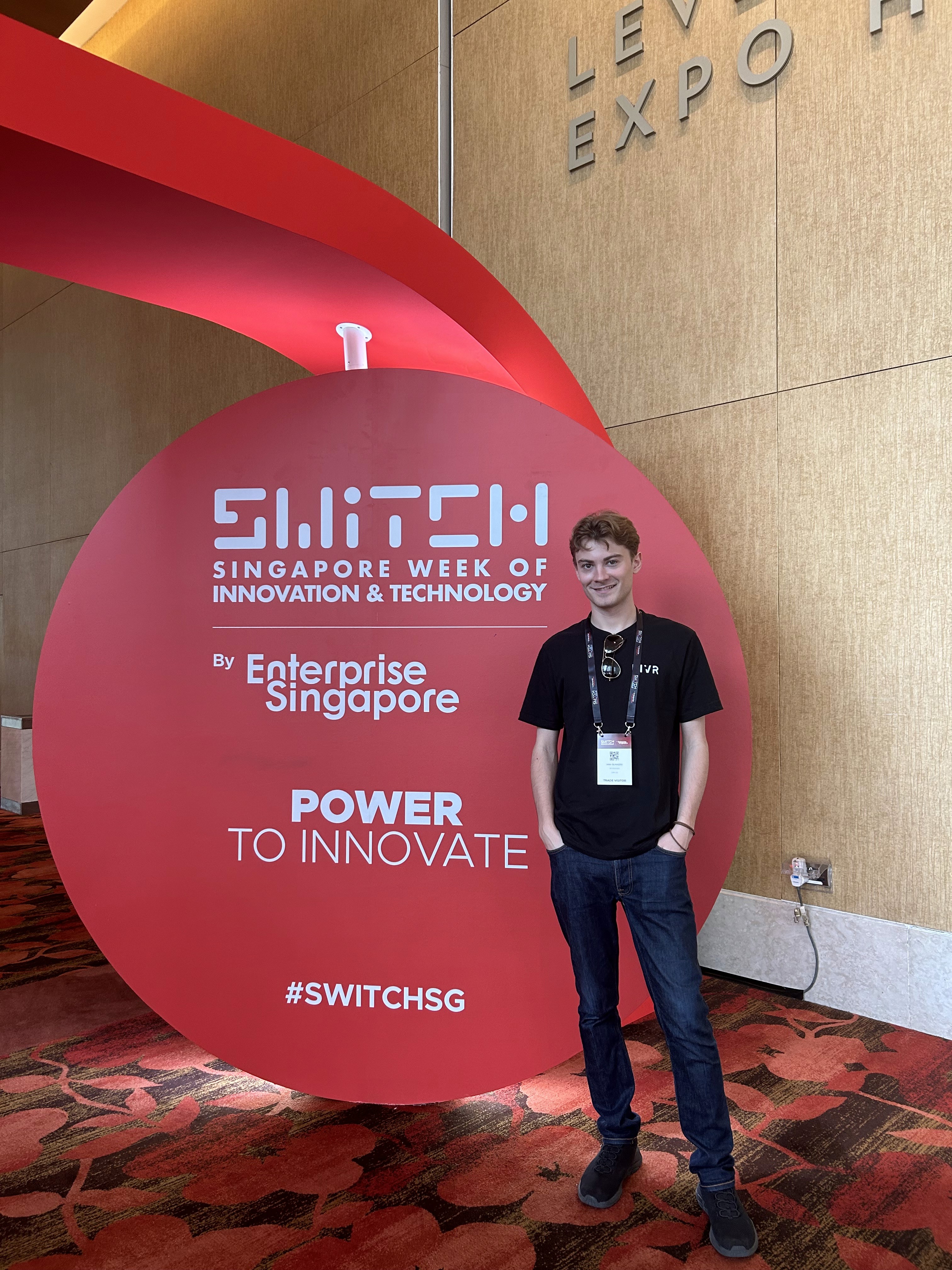
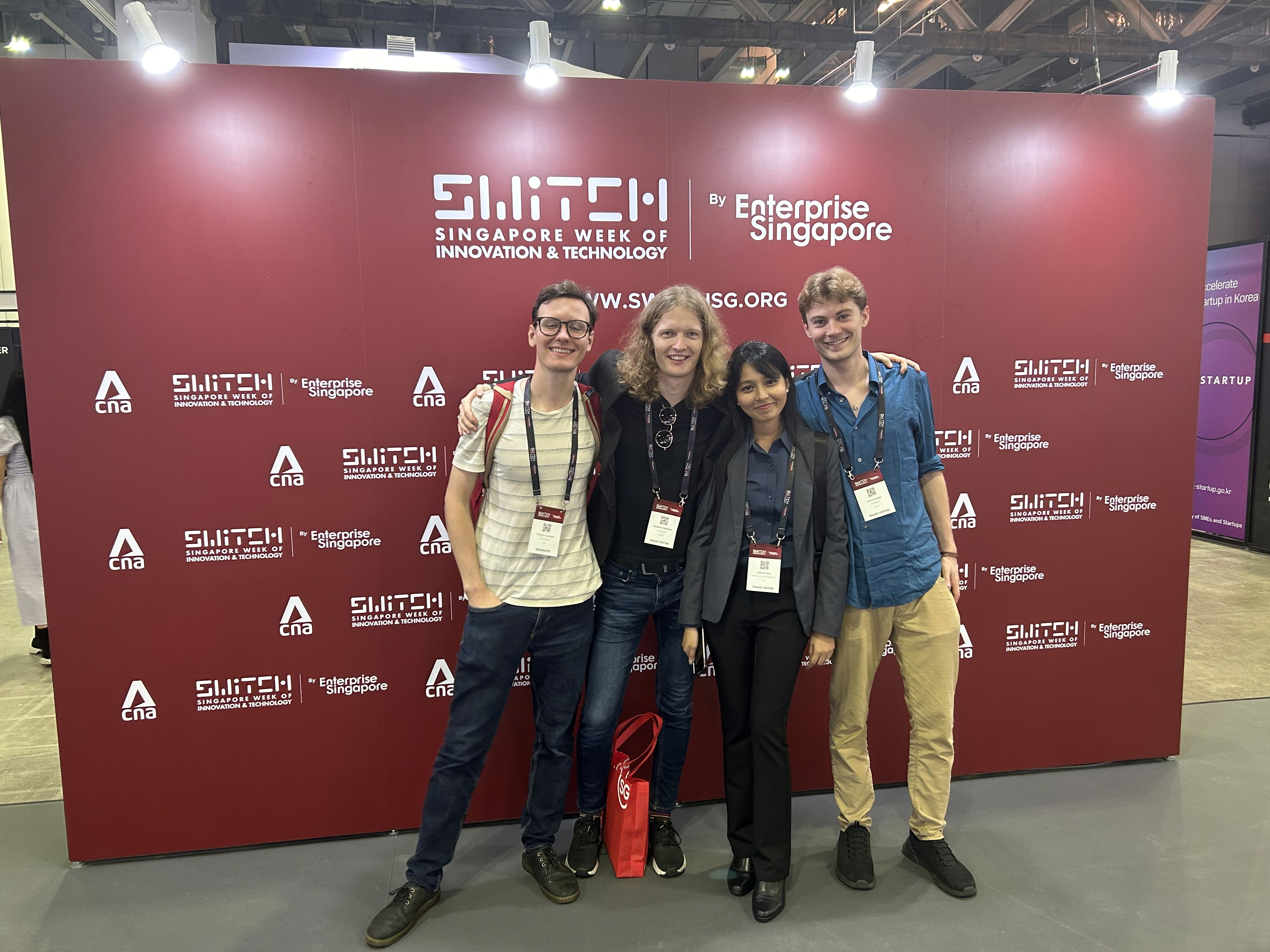
Our AI avatar prototype was presented at SWITCH (Singapore Week of Innovation and Technology) as part of the official Dimension X showcase. At the presentation, we demonstrated a live version of the VR scenario, supported by a promotional video I created to explain the avatar’s potential beyond its original purpose.
Following the event, the prototype underwent further testing by the Singaporean team, who evaluated its use in real-world rehabilitation sessions.
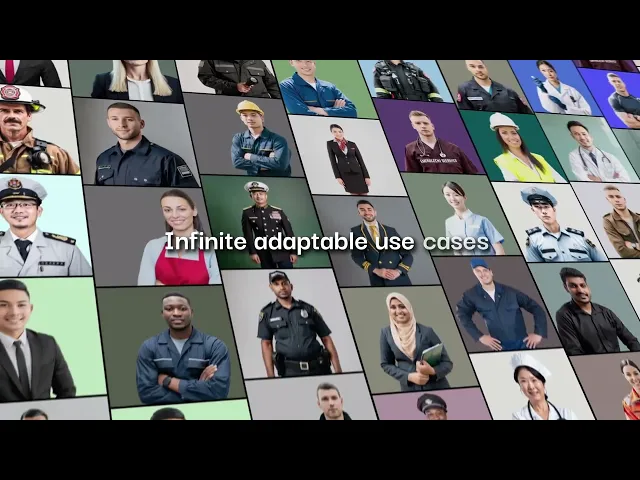
Beyond the context of rehabilitation, the avatar’s flexible architecture has broader applications. I produced a promotional video for potential clients and investors showcasing how the avatar could be repurposed.
Thanks to cross-platform deployment capabilities (VR, AR, web, mobile app), the AI avatar is now being considered for use in multiple sectors where risk-free simulation and conversational engagement are key.
Alternative applications:
Training simulations
Mental health support tools
Customer service automation
Educational roleplay