Tidefall
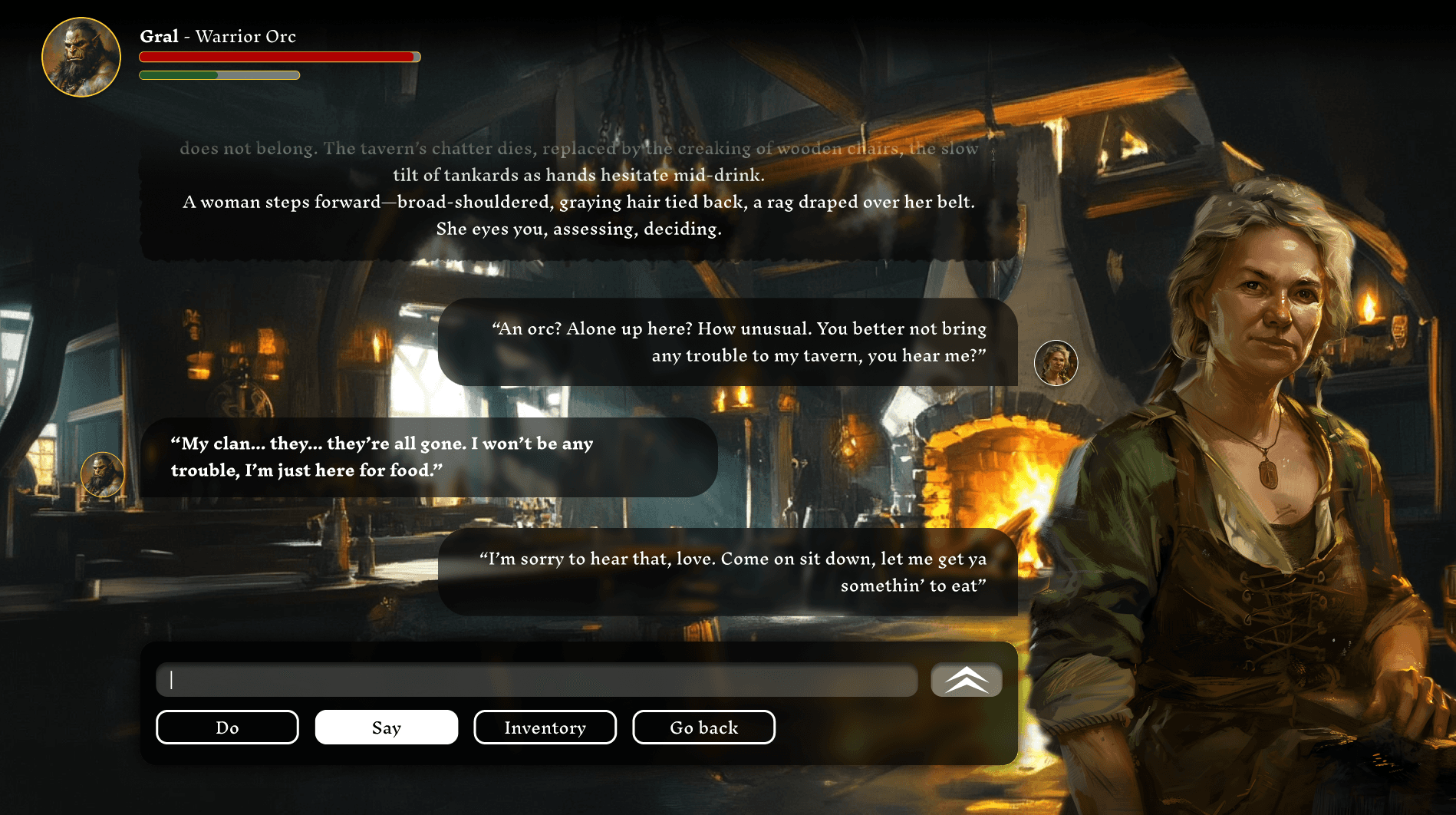
As a UI designer for Tidefall, I was asked to prototype the frontend of a web-based, AI-driven fantasy RPG. The game blends human crafted storytelling with generative AI, offering fun D&D-style campaigns that are playable solo or in multiplayer. My goal was to conceptualise an interface that balances epic immersion with usability, reimagining the game chat space as a portal into this dark fantasy world.
Click here to try the prototype
Client:
Infinity Fiction
Role:
Game UI Designer
Skills:
Game UI design · Interaction concepting · Competitor analysis · Visual storytelling
Collaborators:
Infinity Fiction founding team
Problem:
Most web-based RPG interfaces either mimic tabletop gameplay or lean too heavily on static chatbot UI. But Tidefall needed an original interface for a responsive AI Dungeon Master, made for narrative immersion and scalable to thousands of players.
So how do you let players interact with an AI as richly as they would with a human storyteller without sacrificing clarity, speed, or immersion?
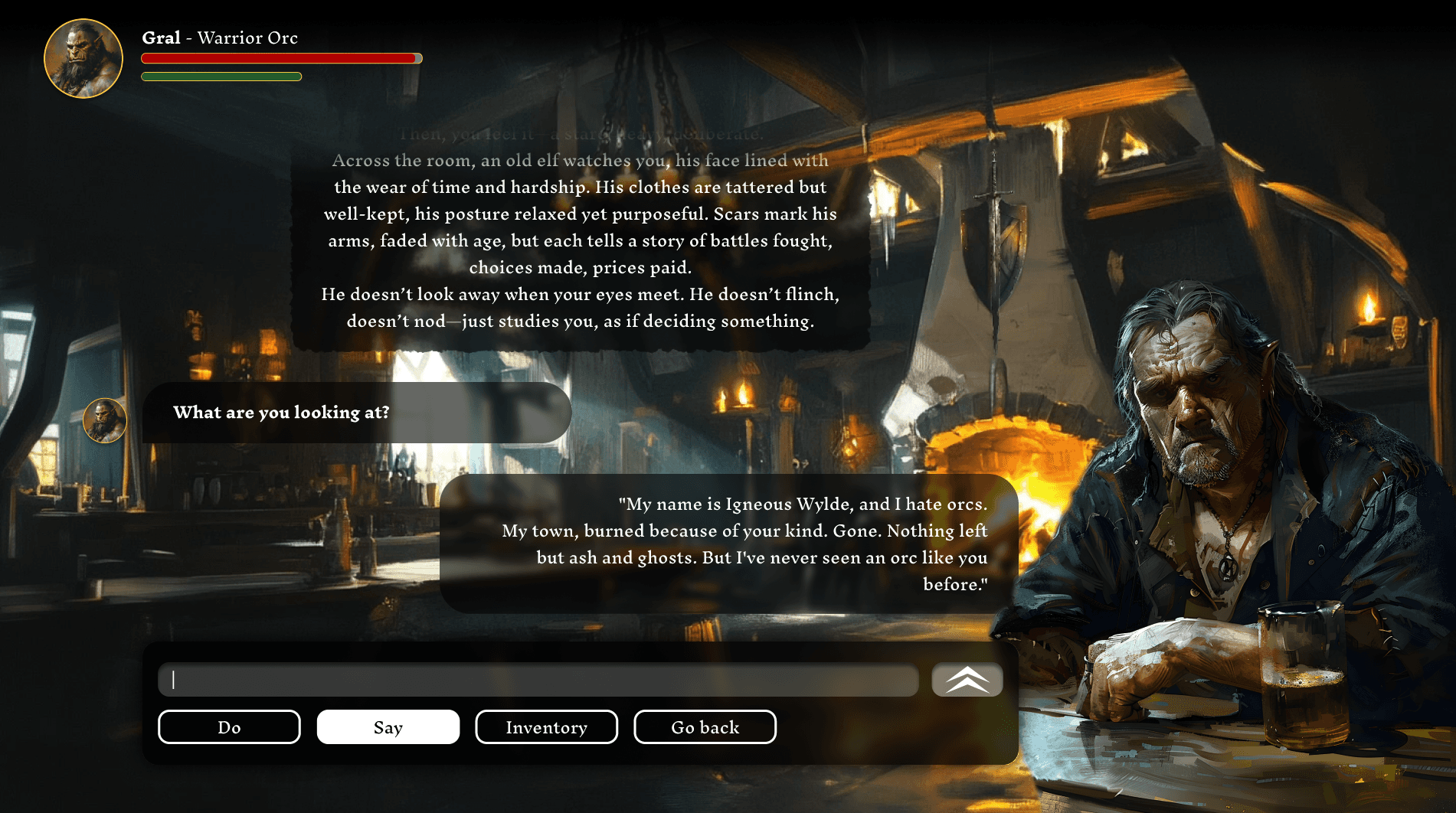
A snapshot of my mock-up for Tidefall
Research
Although we didn’t conduct formal user testing, I explored genre leaders like AlchemyRPG, AI Dungeon, and multiplayer storytelling games to understand player needs and expectations.
I paid particular attention to how they integrate text chat with visuals, stats, and lore without cognitive overload. I also had to ensure the interface respected the genre while supporting AI dynamics.
By mapping out user journeys across exploration, dialogue and combat, I identified opportunities to create designs that put immersion first, ensuring every UI element felt more like a scenery than a board game.
Insights from competitor analysis:
Many existing platforms rely too much on flat UI which misses emotional depth
Players want interfaces that feel like part of the world, not a dashboard
A balance of flexibility and hierarchy is key for a successful gameplay
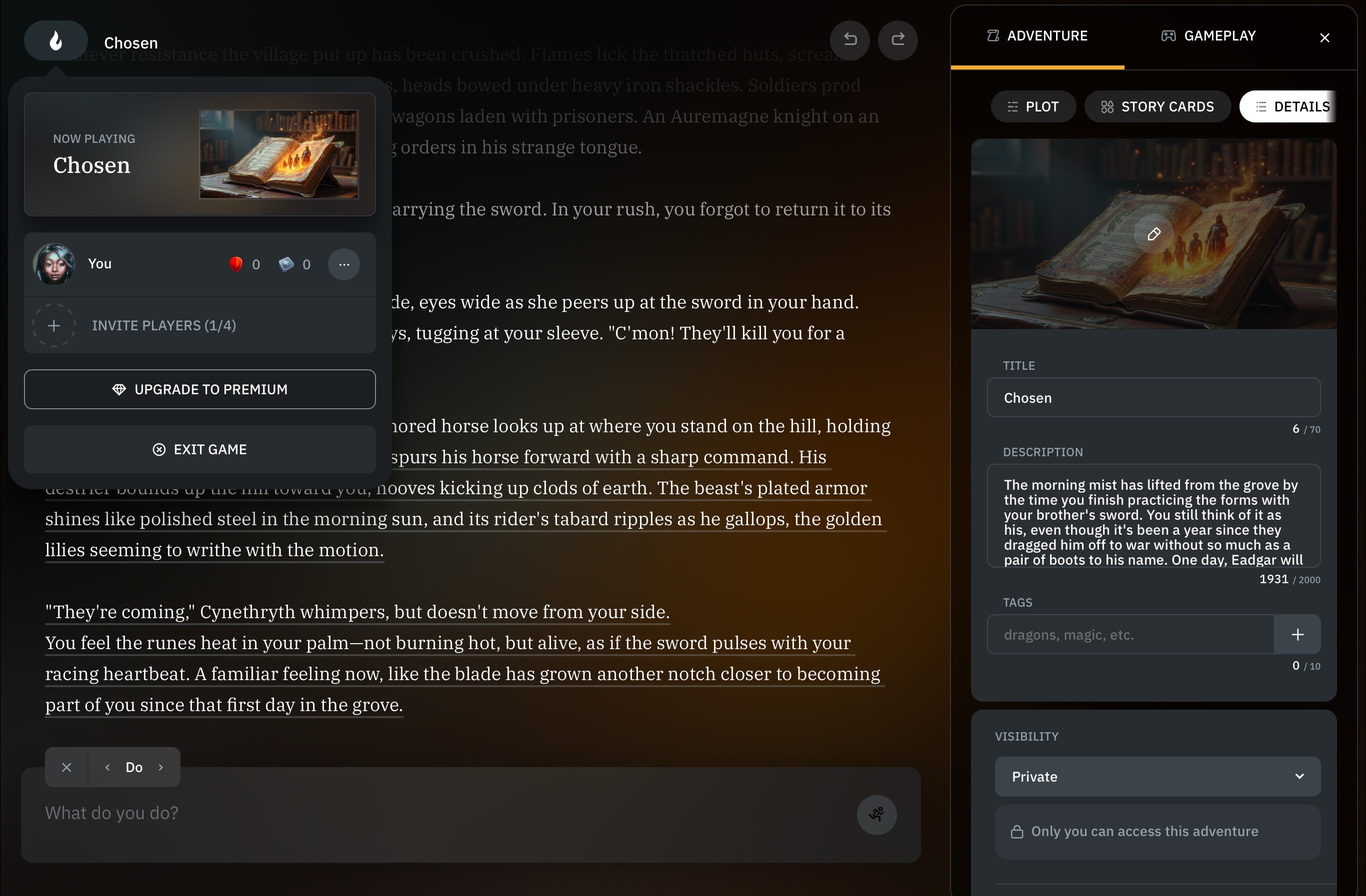
AI Dungeon
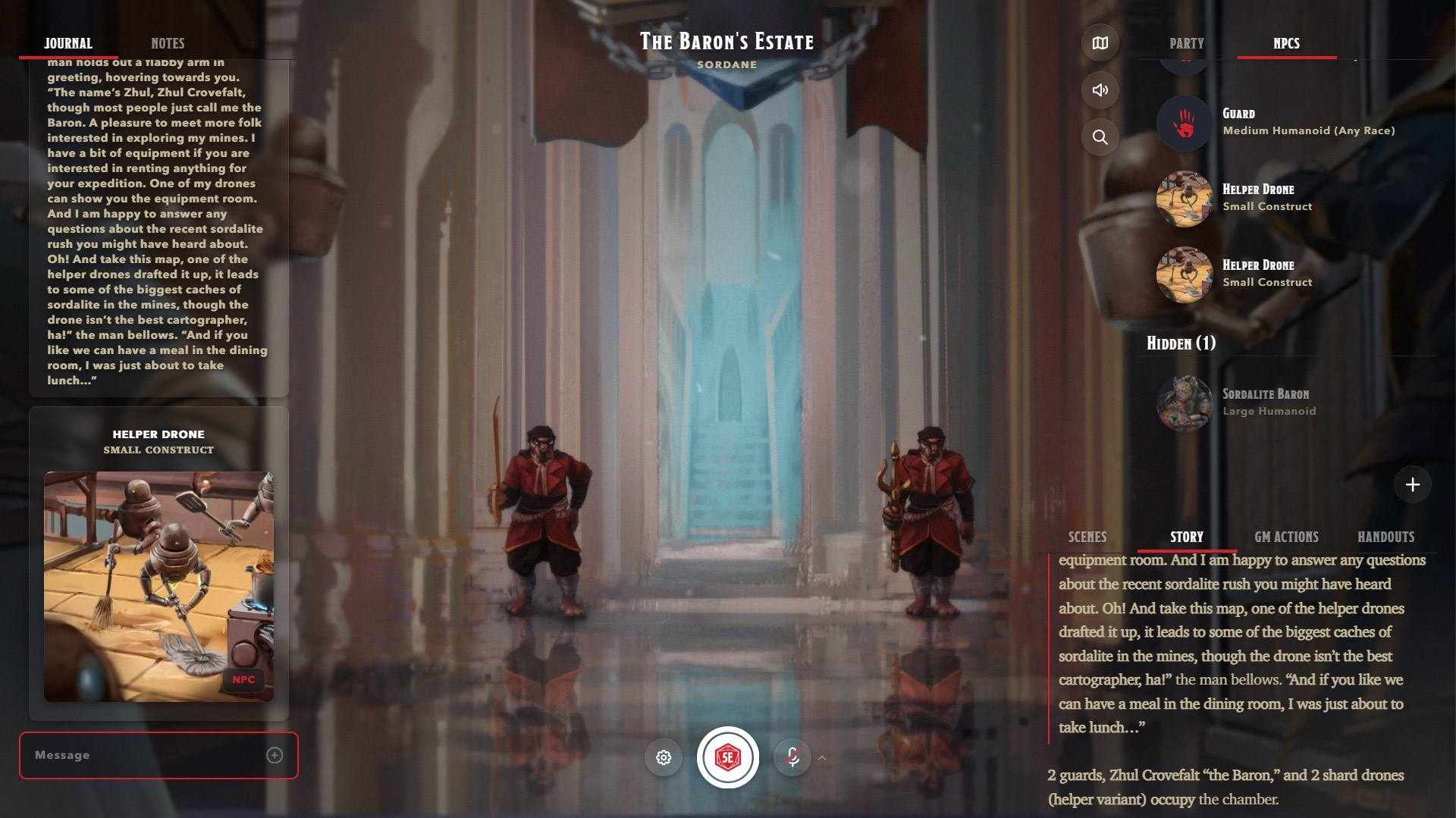
Alchemy RPG
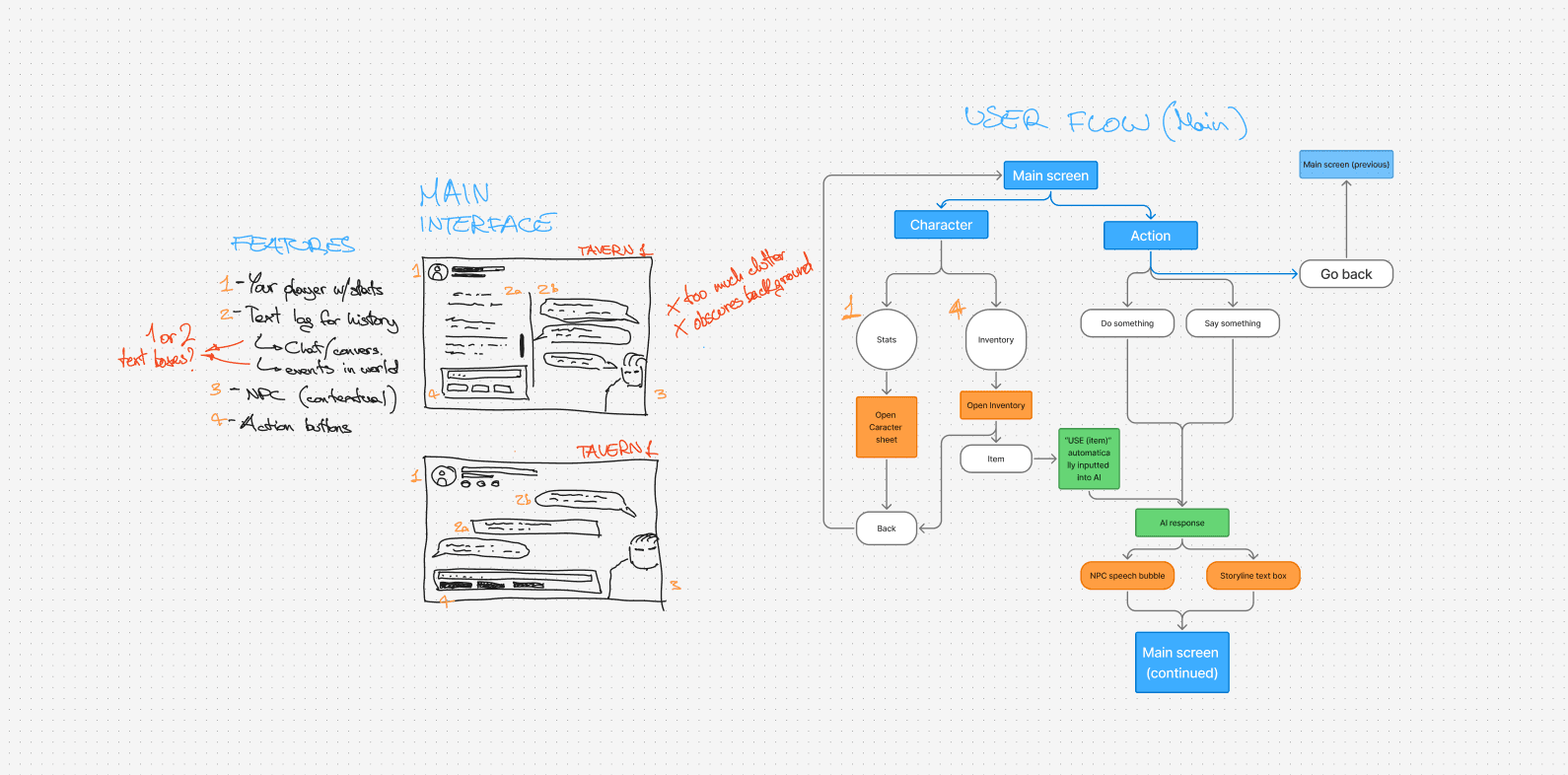
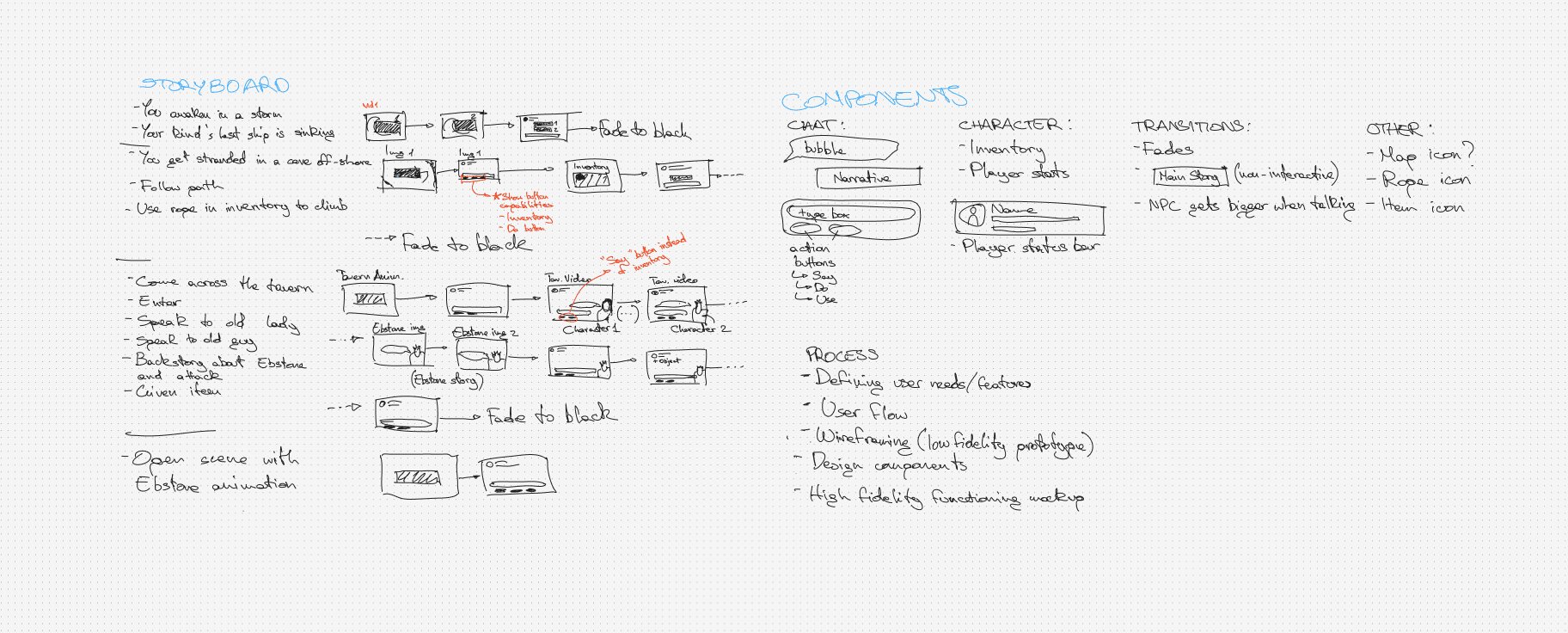
Solution
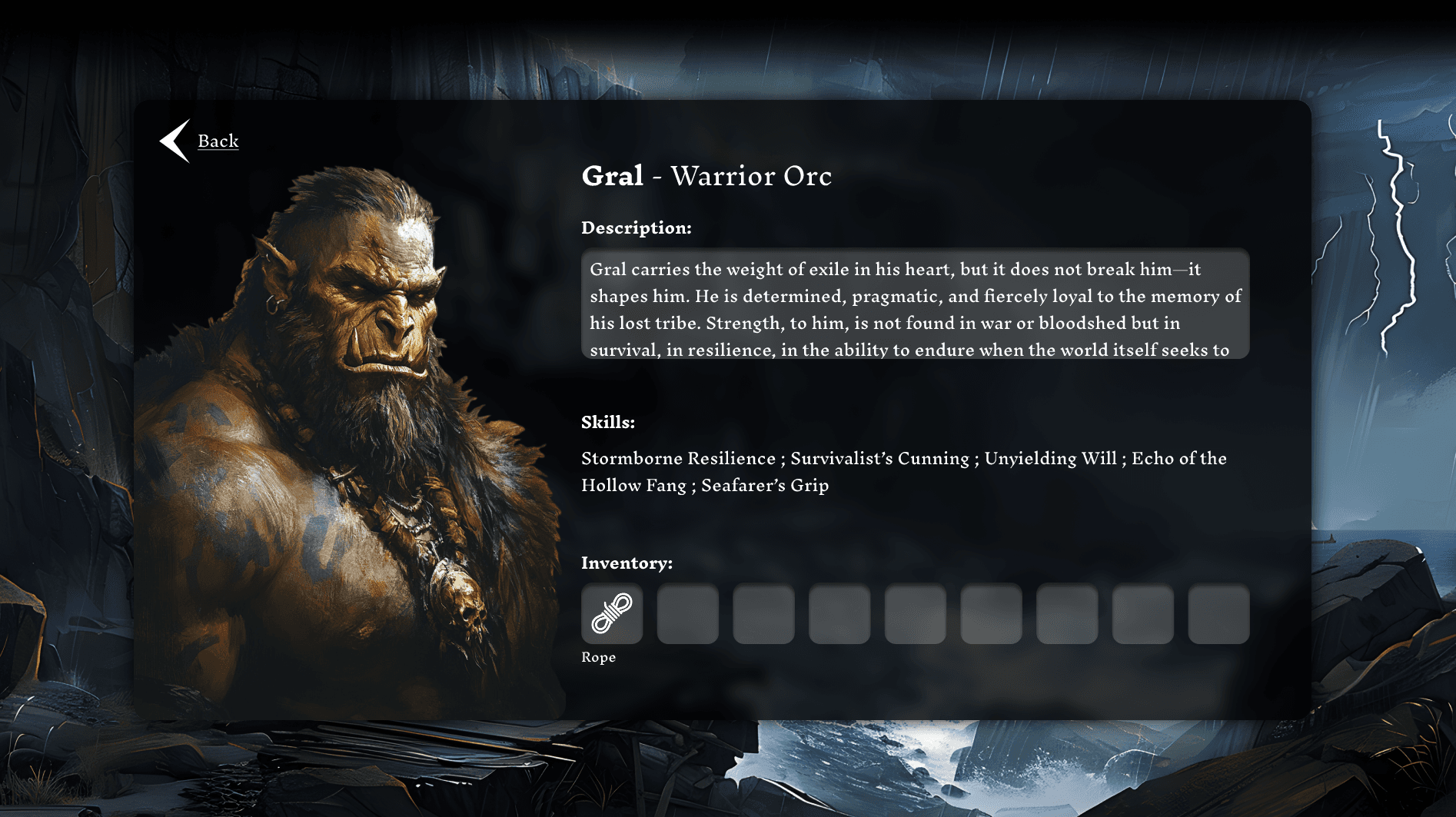
My outcome was a desktop interactive mock-up for Tidefall’s first campaign chapter. The interface combines a cinematic backdrop, player chat with AI, and contextual elements like NPC portraits, music cues, and character stats.
The text is central, but never isolated. Every interaction is layered with subtle animations and fantasy motifs that anchor the experience in the game world.
The principle behind Tidefall’s UI was world-first design: letting the interface feel like a doorway into the story, not just a tool for navigation. I focused on visual depth, narrative framing, and contextual richness, maximising a sense of atmosphere.
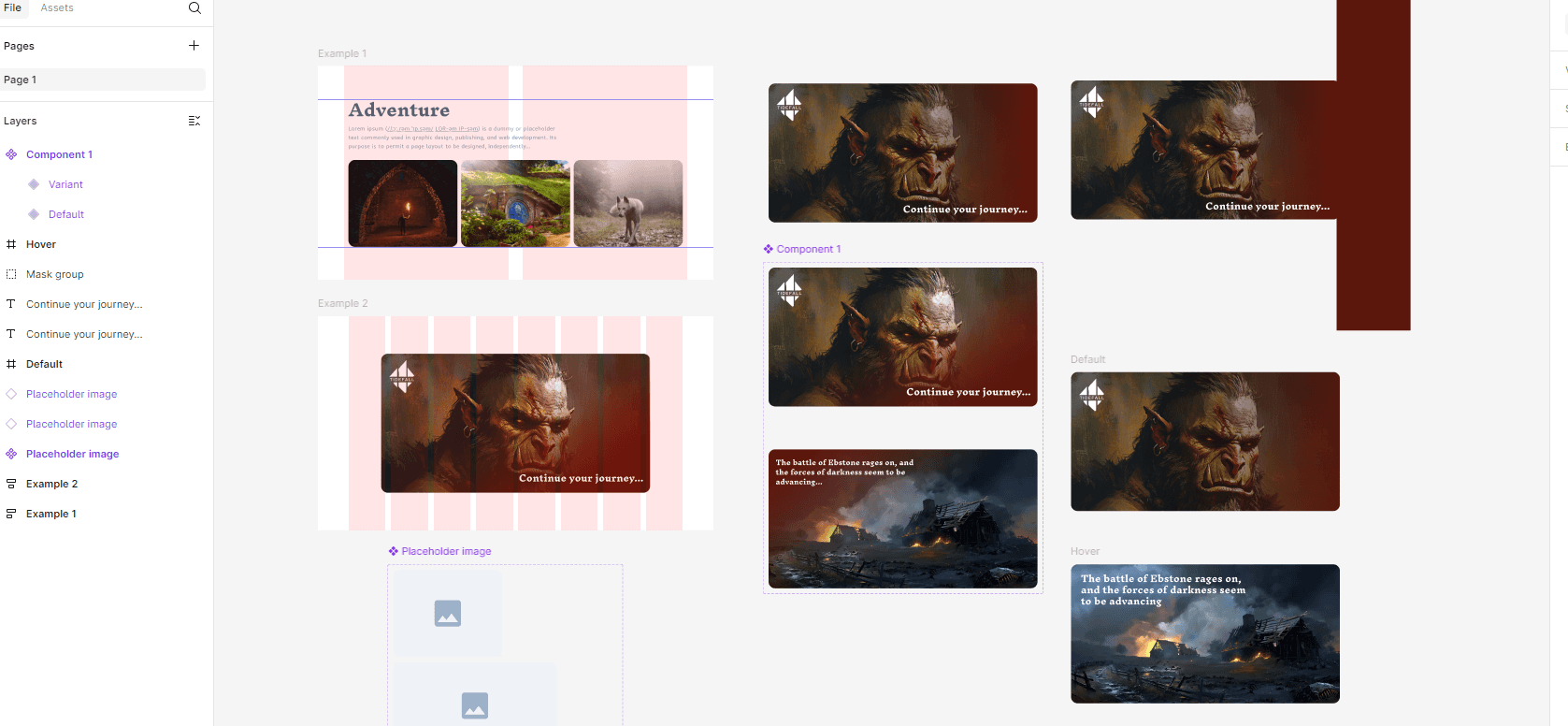
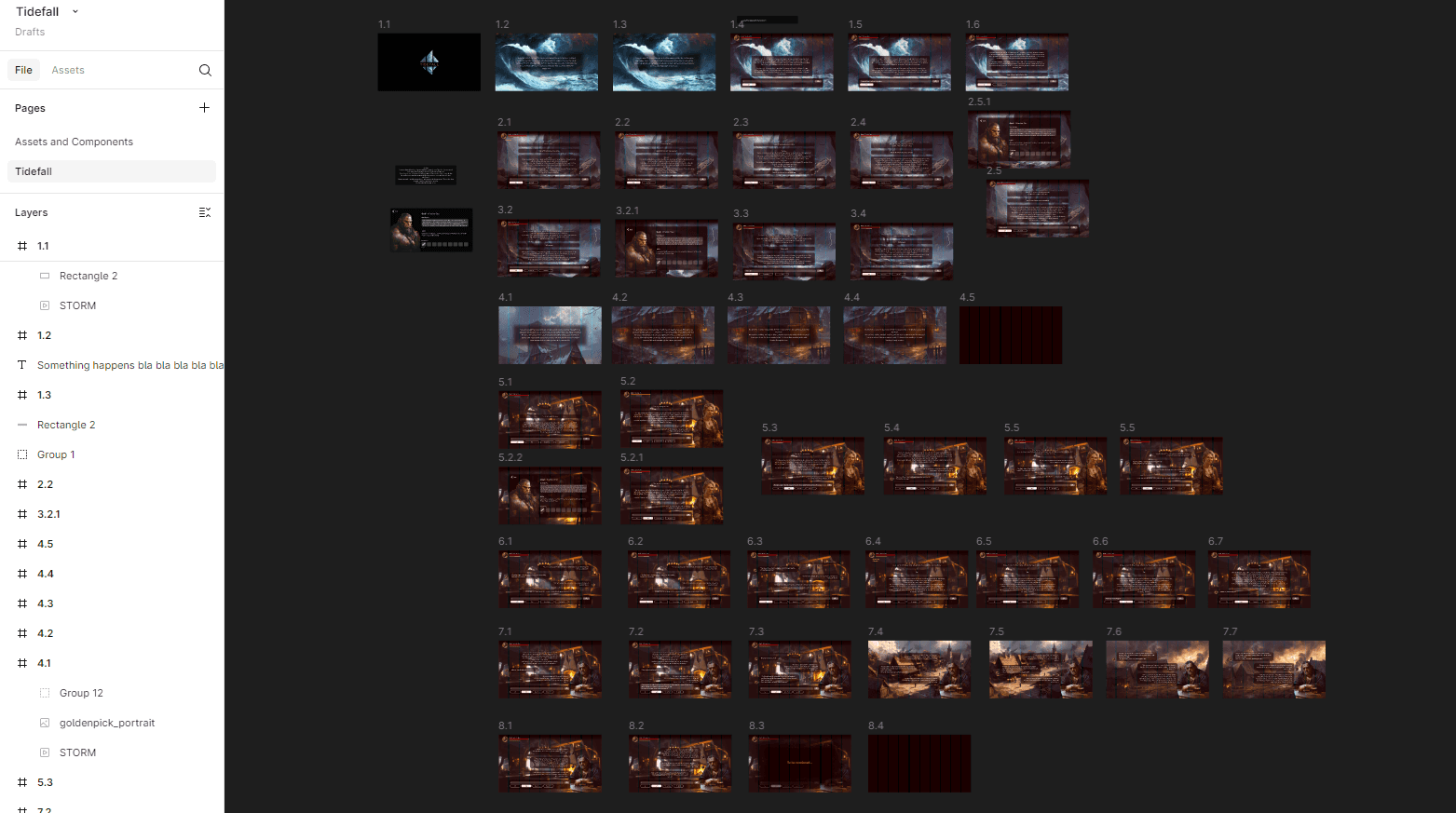
Transitions and modular panel logic were all designed to evolve with player progress, building a visual storyline as the adventure unfolds.
The challenge wasn’t just showing information, but designing a space for imagination. Every button, portrait, and visual asset was shaped to support an open-ended experience where the player can improvise, explore, and react to the AI in real time. With AI acting as the Dungeon Master and powering NPCs, the UI needed to feel alive, adaptive, and built for storytelling.
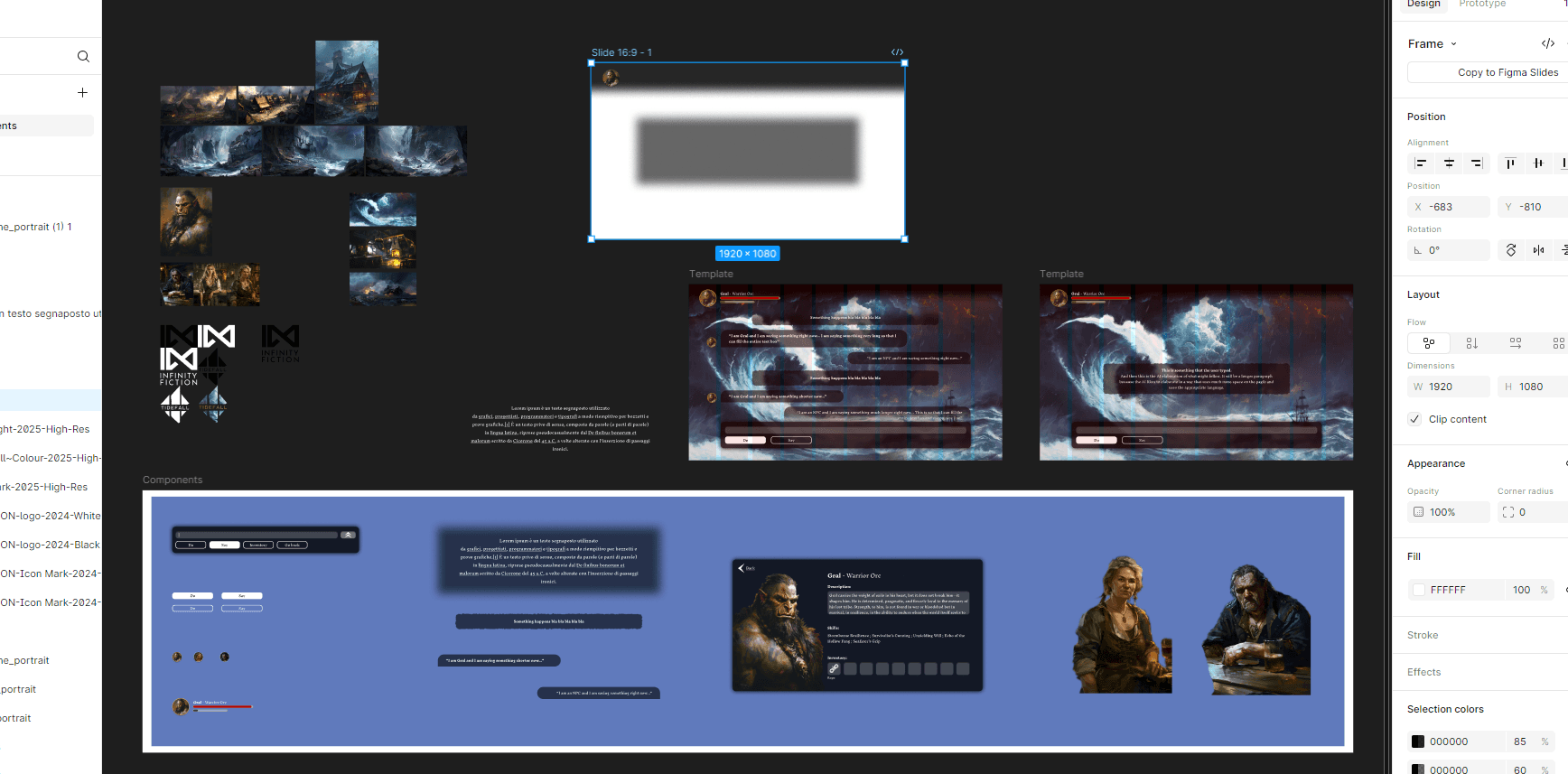
Main interface components:
• Rich text-based game chat (AI + player)
• Character panels with abilities & inventory
• Dynamic background artwork tied to location
• Integrated sound & music triggers
• Transitions and modular panel logic
Infinity Fiction
Platform
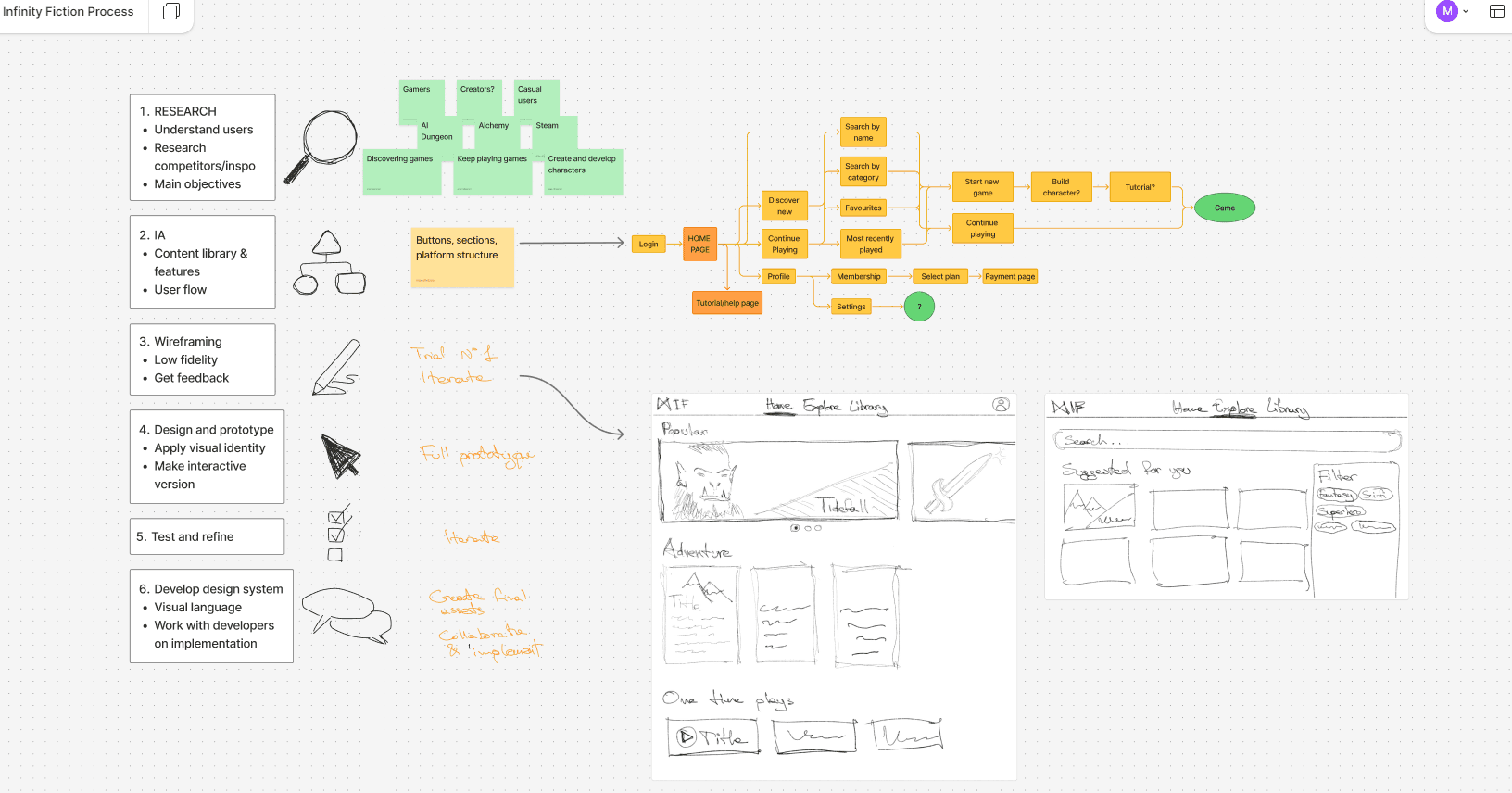
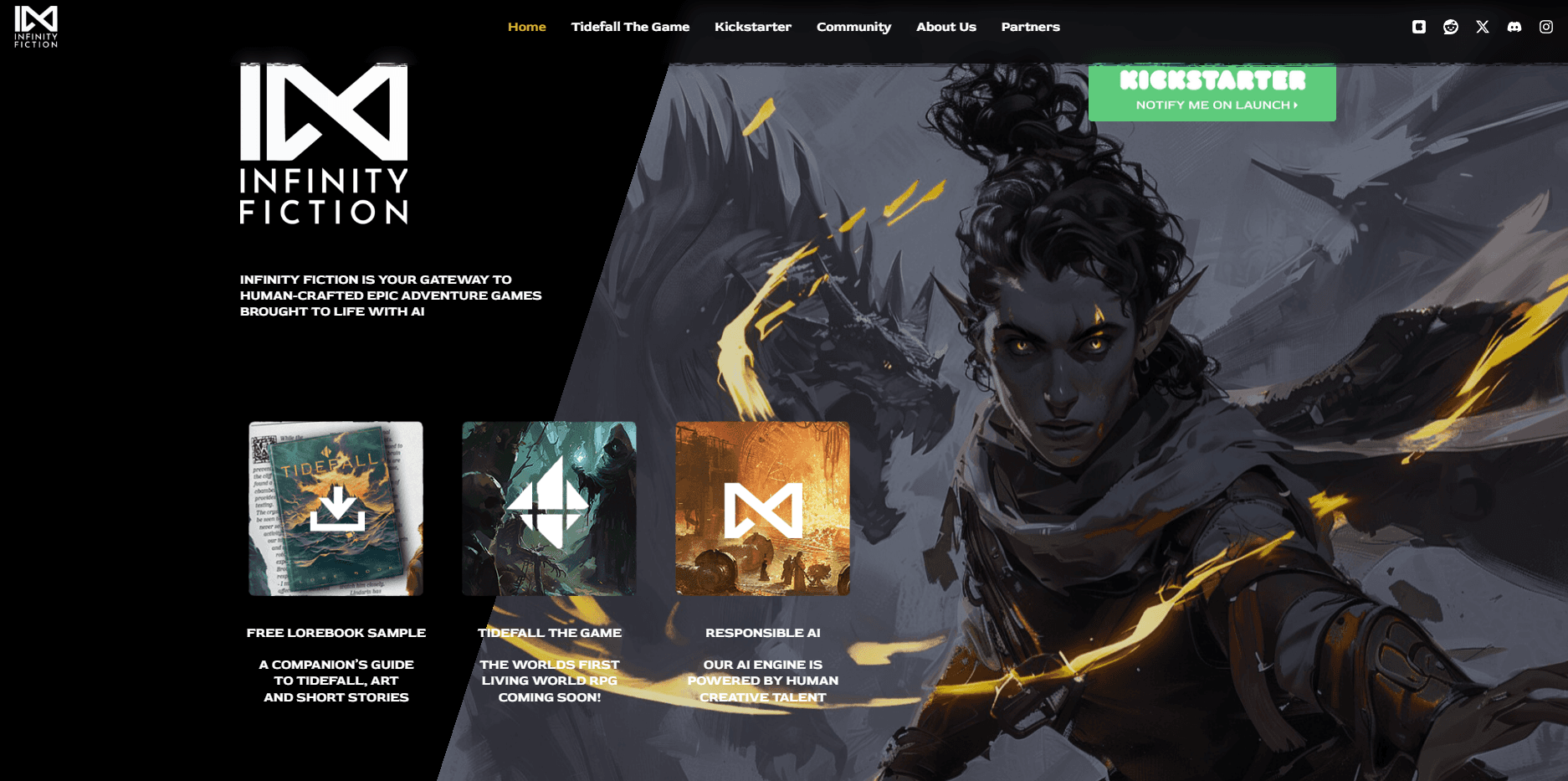
Alongside Tidefall, I contributed ideas toward Infinity Fiction, a platform that will host a growing ecosystem of AI-assisted roleplaying games. Here, players and creators can explore new genres (sci-fi, crime, historical fiction), manage campaigns, and build their own worlds and characters.
While my Tidefall work focused on game-level UI, this future-facing platform work sparked ideas around design systems, creator dashboards, asset libraries, and community feedback loops.